Pisa: Guided Tour of Baptistery, Cathedral, and Leaning Tower
4,7 (502)2h08Pisa, Italy
From€42
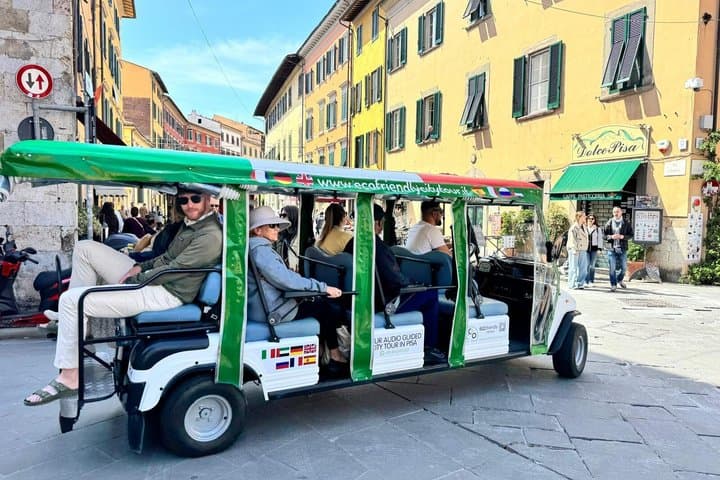
Explore Pisa at your own pace with a self-guided audio tour featuring the city's key architectural sites. Start at Piazza dei Miracoli, home to the Leaning Tower, Duomo, Baptistery, and Camposanto. The tour includes climbing 294 steps of the Leaning Tower, which leans at nearly four degrees. Learn about the Duomo's striped marble facade and its connection to Galileo. The Camposanto showcases frescoes, while the Baptistery is known for its unique acoustics. Venture beyond the tower to the Arno River, where you will find medieval churches, a university quarter, and lively piazzas. This tour is suitable for those interested in history and architecture but may not be ideal for individuals with mobility restrictions due to the tower climb. It is important to note that the audio tour does not include entrance fees for the tower and other monuments.
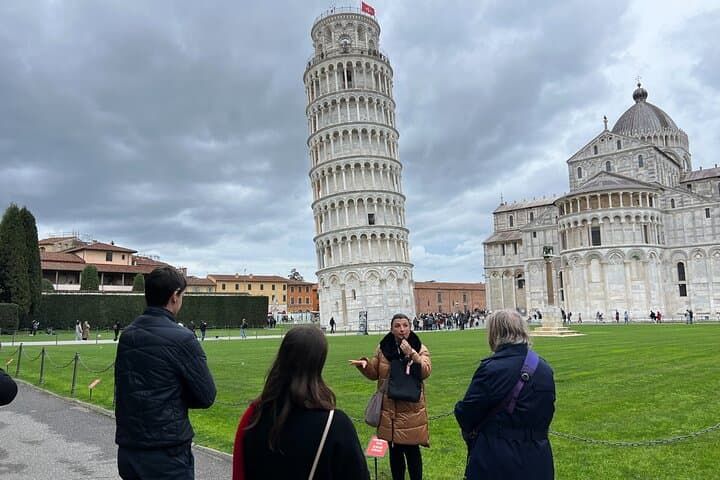
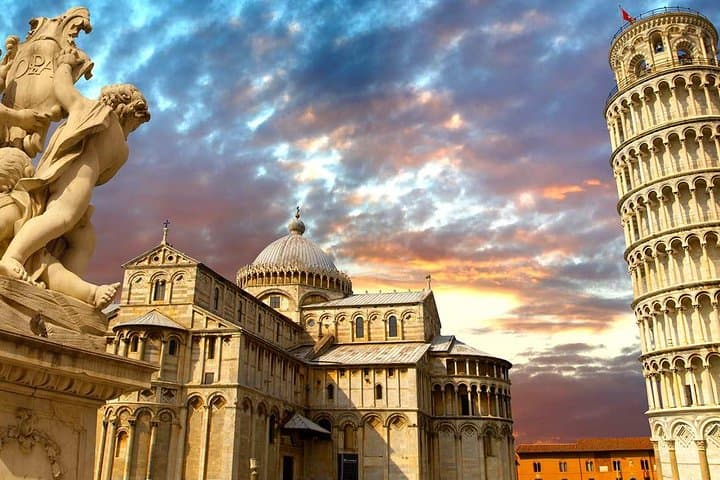
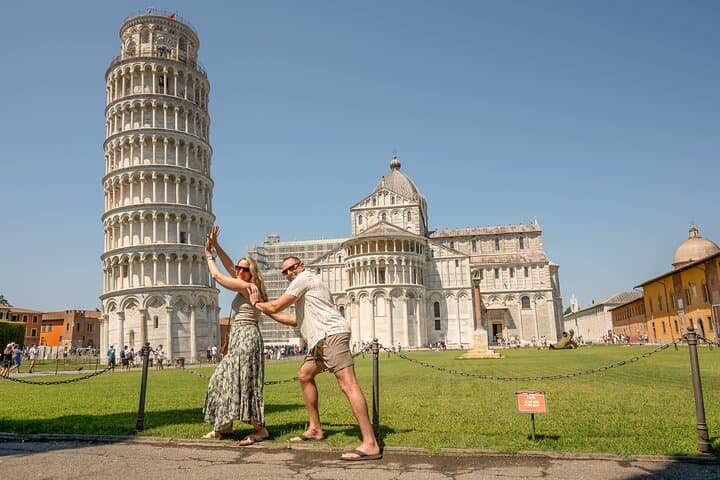
The 'Field of Miracles' spreads its four masterpieces—Cathedral, Baptistery, Bell Tower, and Cemetery—across an expanse of grass that creates one of the world's most harmonious architectural ensembles. The site's UNESCO World Heritage designation recognizes not just individual monuments but their collective impact, the white marble buildings appearing almost dreamlike against the green lawn and blue Tuscan sky. The contrast between the piazza's medieval serenity and the tourist chaos surrounding it requires early morning or evening visits to fully appreciate, though the monuments' power transcends any crowds.
The bell tower that began tilting during construction in 1173 has become one of humanity's most recognized monuments, its 3.97-degree lean—stabilized after massive engineering efforts in the 1990s—transforming structural failure into beloved icon. The 294 steps ascending the tower's hollow interior provide views across Pisa and insight into the marble construction that makes the tower's survival through eight centuries of earthquakes remarkable. The tilt becomes increasingly disorienting as visitors climb, the spiral staircase alternating between steep and shallow as the lean shifts underfoot.
The Romanesque cathedral whose construction in 1063 established the Pisan style that would influence architecture across Tuscany presents striped marble facades, a gilded coffered ceiling, and the bronze doors cast after 1595 fire destroyed Bonanno Pisano's originals. Giovanni Pisano's pulpit, carved between 1302-1310, ranks among medieval sculpture's masterpieces while the legend of Galileo's pendulum observation—likely apocryphal but too good to abandon—connects the building to the Scientific Revolution. The building's scale and decoration demonstrate the wealth of medieval Pisa, a maritime republic that rivaled Venice and Genoa.
The monumental cemetery enclosing a courtyard of sacred soil allegedly brought from Golgotha during the Crusades surrounds visitors with Gothic architecture, Roman sarcophagi, and frescoes that represent some of medieval art's most significant—and most tragically damaged—achievements. The Triumph of Death and Last Judgment frescoes, damaged by Allied bombing in 1944 and partially restored, still convey their terrible power while the sinopie (preparatory drawings) revealed during restoration now display in a separate museum. The cemetery's cloistered atmosphere, ancient tombs, and memorial tablets spanning centuries create contemplative contrast to the piazza's crowds.
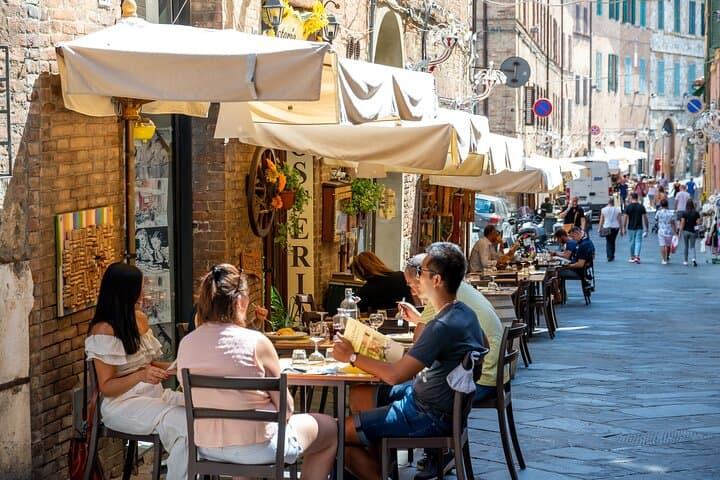
Pisa's most elegant street runs beneath medieval arcades from the river toward the piazza, its boutiques, galleries, and the locals who gather in late afternoon revealing the city that residents experience away from the tower. The covered walkways protect visitors from rain and sun while the buildings above preserve medieval and Renaissance facades that escaped both wartime bombing and tourist-driven renovation. The street's continuation across the Ponte di Mezzo as Corso Italia extends the historic district through the Arno's southern bank.
The museum displaying the preparatory drawings for the Camposanto frescoes—revealed when the painted surfaces were damaged and removed for restoration—provides unique insight into medieval artistic process. The sinopie, drawn directly on the walls in red pigment before the final frescoes were applied, show the artists' original conceptions, corrections, and techniques in a way that finished works cannot. The drawings' survival and display in this purpose-built museum creates an experience available nowhere else, complementing the damaged but powerful frescoes in the Camposanto itself.
Pisa's second most important square occupies the site of the Roman forum and medieval city hall, its current appearance reflecting Giorgio Vasari's 16th-century redesign for Cosimo I de' Medici and the Knights of St. Stephen who headquartered here. The Palazzo della Carovana's ornate facade, covered with sgraffito decoration depicting the knights' history, now houses the prestigious Scuola Normale Superiore while the church of Santo Stefano displays Ottoman flags captured by the knights. The Palazzo dell'Orologio, where Count Ugolino della Gherardesca was starved to death in 1289—as Dante relates in the Inferno—adds dark history to the architectural grandeur.
The streets lining both banks of the Arno reveal Pisa's historic relationship with the river that made it a maritime power, the palaces, churches, and the distinctive small church of Santa Maria della Spina creating one of Tuscany's most picturesque riverside walks. The Ponte di Mezzo, rebuilt after wartime destruction, connects the lungarni and provides river views while the Luminaria di San Ranieri on June 16—when thousands of candles illuminate the riverside buildings—represents Pisa's most spectacular festival. The daily rhythm of students, shoppers, and evening strollers along the lungarni shows Pisa as living city rather than tourist attraction.
Reviews are hosted by Viator
This rating summarises the reviews collected by Viator, which keeps them on its own listing. We show the average exactly as it reaches us, without the individual comments.
Read the reviews on Viator