Frankfurt Highlights English Walking Tour
4,9 (1358)2h30Frankfurt, Germany
From€30
Explore Frankfurt through a self-guided audio tour, allowing you to navigate at your own pace. The tour starts at Römerberg, featuring reconstructed medieval architecture and the historic Rathaus, both significant due to their role in the city's post-World War II restoration. Continue to the Museum Embankment, home to 13 prominent museums along the Main River, including the Städel, which showcases 700 years of European art. Visit the birthplace of Goethe, restored to reflect its 18th-century style. Ascend the Main Tower to enjoy panoramic views of Germany's only true skyscraper skyline. Sample local cuisine in traditional apple wine taverns in Sachsenhausen, known for Handkäse mit Musik and Grüne Soße. Explore the tropical greenhouses at Palmengarten and visit the Kleinmarkthalle, a bustling covered market. Conclude your tour with a walk along the Main River promenade and cross the Eiserner Steg bridge at sunset, witnessing the blend of financial strength, cultural richness, and Hessian heritage that defines Frankfurt.
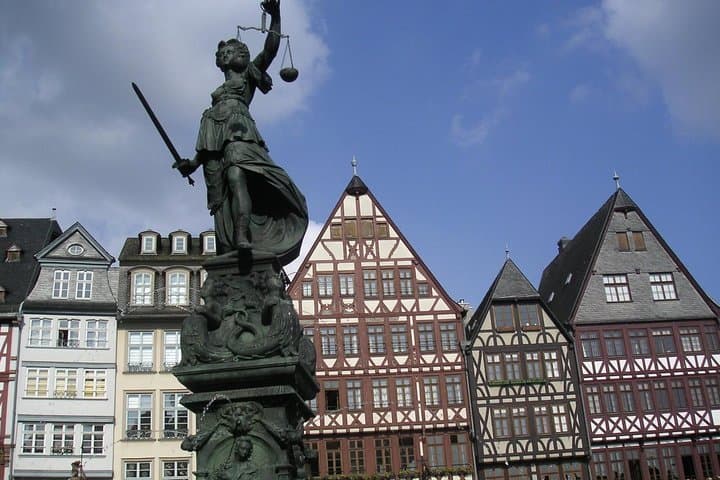
Frankfurt's historic heart was almost completely destroyed in 1944 Allied bombing raids but rebuilt in the 1950s, its half-timbered buildings and Gothic town hall reclaiming the medieval atmosphere that once made this among Germany's most picturesque squares. The Römer—actually three connected gabled buildings—has served as city hall since 1405, its Kaisersaal hosting coronation banquets for Holy Roman Emperors whose portraits still line the walls. The Fountain of Justice, the reconstructed Ostzeile facades, and the old Nikolai Church create the traditional German cityscape that elsewhere survives but here represents a deliberate act of cultural recovery.
The birthplace of Johann Wolfgang von Goethe—Germany's Shakespeare, its greatest literary figure—has been restored to its prosperous 18th-century appearance, complete with the desk where he wrote The Sorrows of Young Werther and early drafts of Faust. The adjacent museum adds context through manuscripts, first editions, and the cultural history of Goethe's era while the house itself transports visitors into the bourgeois world that produced Germany's literary genius. The meticulous reconstruction following wartime destruction demonstrates Frankfurt's commitment to reclaiming its cultural heritage.
Frankfurt's remarkable museum district lines both banks of the Main River with 13 major institutions—the Städel, German Film Museum, Museum of World Cultures, and others—in one of Europe's most concentrated cultural zones. The Städel Museum alone houses one of Germany's most important art collections, from medieval altarpieces through Impressionism to contemporary works. The riverside promenade connecting the museums, weekend flea markets on the southern bank, and the bridges offering skyline views create experiences beyond the museum galleries themselves.
One of Germany's oldest and most important art museums houses 700 years of European art in a collection founded in 1815 and continuously expanded through gifts, purchases, and the spectacular underground expansion completed in 2012. The medieval and Renaissance German collections, Impressionist paintings, and contemporary works provide comprehensive survey while masterpieces by Botticelli, Dürer, Vermeer, and Monet justify extended visits. The garden extension's subterranean galleries, lit by circular skylights, demonstrate how contemporary architecture can complement historical collections.
The neighborhood south of the Main preserves Frankfurt's traditional Apfelwein (apple wine) culture in dozens of taverns where communal tables, ceramic jugs called Bembel, and the simple Hessian cuisine create atmosphere lost in the modern city center. The authentic establishments serve Handkäse mit Musik (hand cheese with onion-vinegar dressing), schnitzel, and Grüne Soße—the herb sauce that Goethe immortalized—alongside the tart, refreshing cider that distinguishes Frankfurt from beer-dominated Germany. The neighborhood's residential streets, weekend flea market, and the Museum Embankment's southern anchor make Sachsenhausen essential for experiencing local Frankfurt.
One of Germany's largest botanical gardens cultivates plants from every climate zone across 22 hectares of outdoor gardens, glasshouses, and the tropical rainforest house whose 19th-century iron structure represents Victorian botanical ambition. The rose garden, alpine rock garden, and seasonal flower displays provide outdoor attractions while the greenhouses offer year-round tropical and subtropical experiences regardless of Frankfurt's continental climate. The garden's position adjacent to the university and its use by residents for jogging, picnicking, and Sunday strolls reveal its importance beyond tourist attraction.
Frankfurt's covered market hall has served the city since 1954, its 156 stalls selling fresh produce, meats, cheeses, flowers, and the international specialties reflecting Frankfurt's diverse population. The market provides both practical shopping—locals actually buy their groceries here—and culinary tourism through the wine bar upstairs, the ready-to-eat options throughout, and the opportunity to sample regional products. The surrounding streets' food shops and the market's position near the Zeil shopping district make it convenient for combining culture and commerce.
The Old Opera House—destroyed in 1944, rebuilt only in 1981 after decades of debate—has become Frankfurt's most elegant concert and event venue, its Italian Renaissance facade concealing thoroughly modern concert halls within. The Opernplatz in front provides one of Frankfurt's most popular gathering spaces while the building's rebirth symbolizes the city's ongoing recovery of cultural landmarks lost in the war. Evening performances, the surrounding upscale shopping district, and the illuminated facade make the opera area particularly appealing after dark.
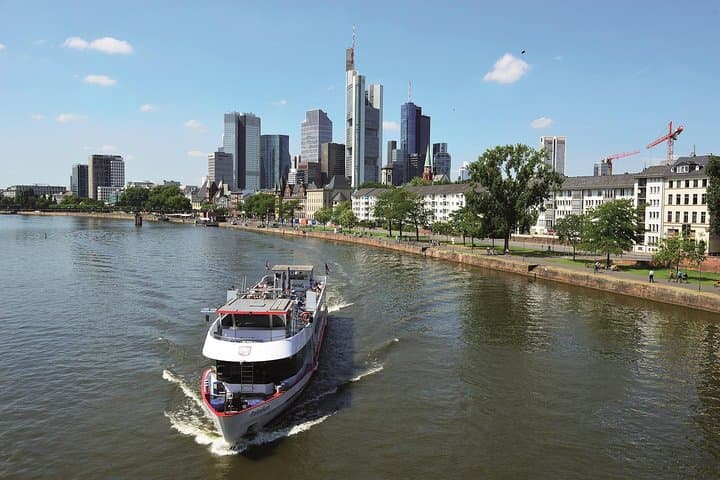
The riverfront walkways on both sides of the Main provide Frankfurt's most pleasant strolling, with views of the skyline, the museum district, and the historic bridges that connect the city center to Sachsenhausen. The Eiserner Steg pedestrian bridge—a 19th-century iron structure now famously covered with love locks—offers the classic Frankfurt photography position while boats, cyclists, and evening joggers share the riverside paths. The combination of skyline views, museum access, and the Sachsenhausen apple wine taverns make the river promenade the natural conclusion to any Frankfurt exploration.
Reviews are hosted by Viator
This rating summarises the reviews collected by Viator, which keeps them on its own listing. We show the average exactly as it reaches us, without the individual comments.
Read the reviews on Viator