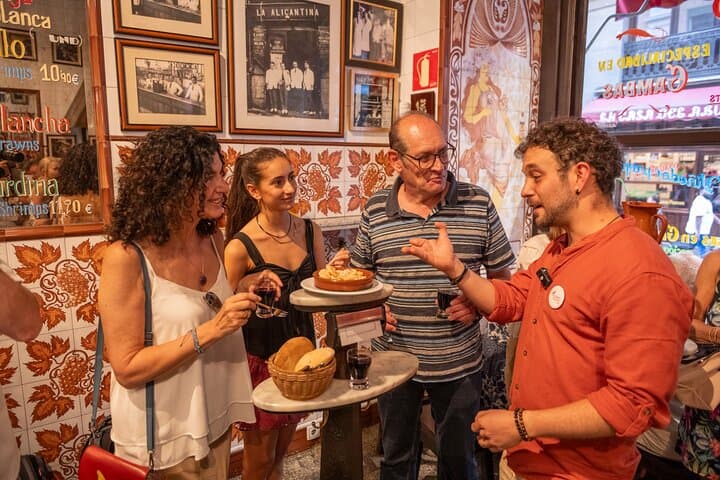
Madrid Tapas & Wine Tasting Food Tour
4,9 (4969)3hMadrid, Spain
From€79
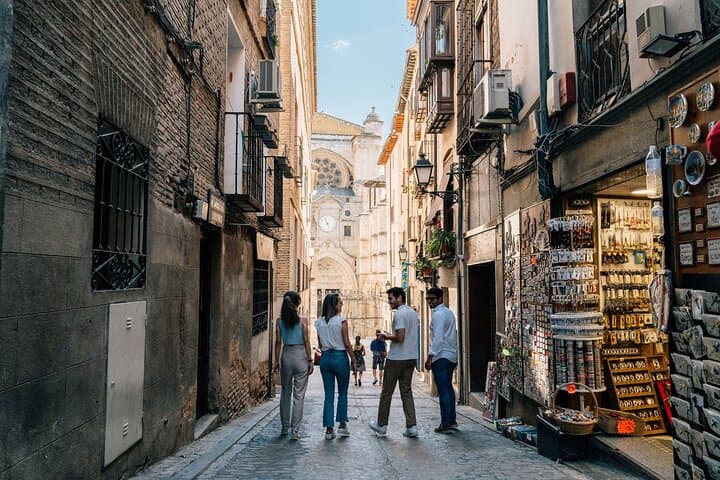
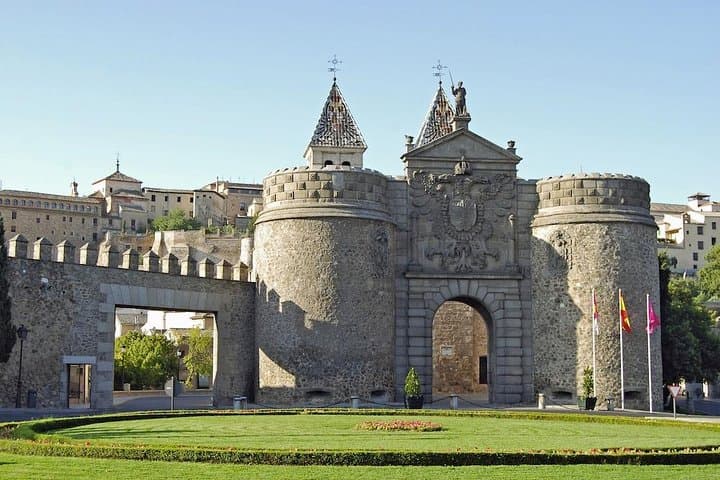
This half day tour in Toledo begins with a panoramic bus ride around the city walls and a stop at Mirador del Valle for photo opportunities. A walking tour of the old town follows, including a visit to Plaza del Ayuntamiento and the interior of the Primate Cathedral, notable for its Gothic architecture. The tour continues to the old Palace of Justice and through the Jewish quarter, where you will see the Church of Santo Tomé, home to El Greco's "The Burial of Count Orgaz." The visit concludes at the Old Synagogue of Santa María la Blanca, highlighting the historical coexistence of Christians, Muslims, and Jews. This tour is designed for those looking to explore Toledo's rich cultural heritage in a compact timeframe.
Before it was an Arab market and until a few years ago there was a street market called "popularly" on Tuesday, it was Enrique IV who granted Toledo a market every Tuesday, a tradition that comes from far away and is currently held in the Parque de la Vega. Zocodover comes from Arabic, it means market of the beasts, and this square was also used to publicly execute the condemned.
The church of Santo Tomé or Santo Tomás Apóstol is located in the historic center of the Spanish city of Toledo, and was founded after the reconquest of this city by King Alfonso VI de León.1 It appears cited in the twelfth century , as built on the site of an old 11th century mosque.2 This mosque, together with others from the city, were used as Christian churches without major changes, since no buildings were destroyed in the capture of the city. However, at the beginning of the fourteenth century, due to being in a dilapidated state, it was completely rebuilt by Gonzalo Ruiz de Toledo, Lord of Orgaz, and the old minaret of the mosque was transformed into a bell tower in Mudejar style.3 Its fame is due to all for housing inside, the painting The Burial of the Count of Orgaz by El Greco, which can be seen by accessing the back of the church.
Beyond its concrete historical and artistic value, the Cathedral Church has a value and a theological significance as a reference for the pastoral life of the whole diocese, for priests and for the lay faithful. In addition, the cathedrals have been the forge place of our Western and European culture; they were the embryo of the current universities, they anticipated welfare work and they were art workshops. Today the cathedrals are witnesses of that culture and message of transcendence and values for the people of today.
Santa María la Blanca is a temple located in the Spanish city of Toledo. Built in 1180 as a synagogue and, having functioned as such for 211 years, it was expropriated and transformed into a church as a result of the pogrom of 1391. At present the building belongs to the Catholic Church, but there is no cult in it. It is open to the public and functions as a museum or center where both cultural and educational activities take place.
Reviews are hosted by Viator
This rating summarises the reviews collected by Viator, which keeps them on its own listing. We show the average exactly as it reaches us, without the individual comments.
Read the reviews on Viator