Berlin's Best: 2 Hour Walking Tour Third Reich and the Cold War
5,0 (6204)2hBerlin, Germany
From€20
Explore Berlin on a 3-hour bike tour that covers key historical sites such as the Brandenburg Gate, Reichstag building, Checkpoint Charlie, and the Berlin Wall. The tour is guided, allowing participants to navigate easily while learning about the city's history and culture. The experience is suitable for all ages and interests, making it accessible to a wide range of travelers. This bike tour is ideal for those with limited time who wish to see significant landmarks and gain insights into Berlin’s past.
The tour starts at the fine location of Berlin’s Alexanderplatz, with the choice of a proper bike for your needs. Get assistance from your English-speaking guide, who will get you ready for a pleasant ride from one iconic sight to another. Enjoy the photo-and-question stops at landmarks so as to remember the best moments of your stay in Berlin
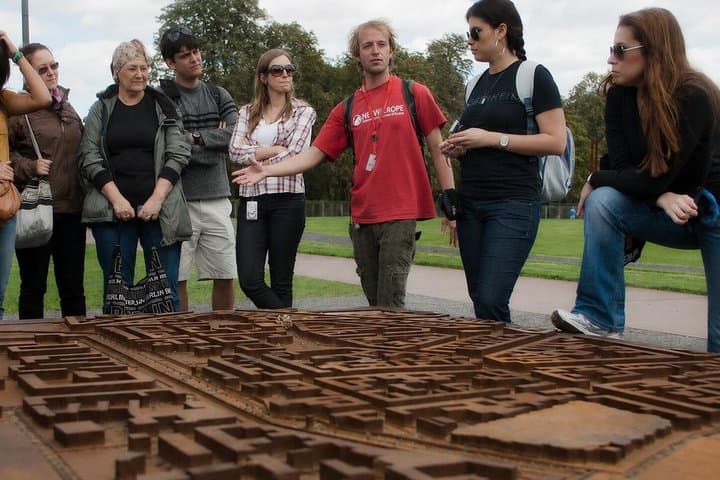
Head on over to the Memorial of the Berlin Wall, commemorating the partition of Berlin and Germany, and learn vivid, insightful information and facts about it. The memorial includes a 60-meter-long original wall and a Wall Documentation Center with seminar rooms and exhibitions.
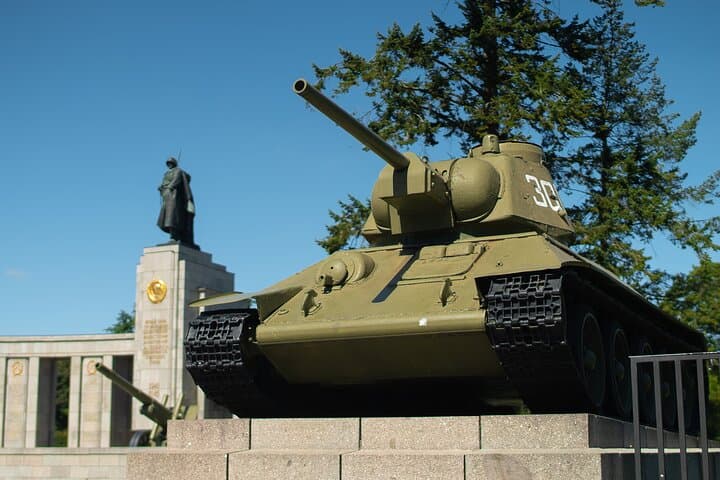
Continue collecting Berlin highlights and discover the Soviet War Memorial in Tiergarten Park. The Memorial was the first monument to the fallen Soviet soldiers in Berlin, built in 1945. The monument symbolizes the victory over national socialism and pays respect to everyone who sacrificed their lives in that battle. Learn some details about the memorial and its symbols as you remember the history behind them.
Take a look at the administrative building named after German ex-president of the Reichstag Paul Lobe, which is an additional building of the German parliament. Paul-Lobe-Haus is linked with Marie-Elisabeth-Luders-Haus, another administrative building, with a bridge that is called a "jump over Spree." The construction, with 1,700 rooms, opened in 2001.
Ride by the freestanding 42-meter carillon, one of the most peculiar sights of Tiergarten. Be carried away by the sound of this musical instrument with dozens of bells that play different tunes. There are 68 bells weighing 48 tons connected to keys, which makes it the biggest in Europe and fourth in the world by the number of bells.
Pedal through the beautiful lawns of Spreebogenpark and hear some history facts about the WWII actions and the Soviets' final offensive on the Reichstag Building. Enjoy a big area to relax and do sports.
Admire the building of the Gropius Bau Museum, one of Europe’s most important exhibition venues. Once a museum of applied arts, it now houses modern art exhibitions in a splendid neo-Renaissance building that was erected between 1877 and 1881.
Reach the German Chancellery and marvel at the fine example of modern architecture. The building was under construction for 4 years and was finished in 2001, immediately becoming one of Berlin's landmarks. Due to the reunification of Germany and Berlin becoming the capital of both parts, the city needed a new building to house the Chancellor's main office. Reaching up to 36 meters, its transparent façade is reminiscent of theater decorations.
Capture your marine moment with the Neptune Fountain, one of the most impressive fountains in the city. The majestic sculpture of the sea god is surrounded by marvelous female figures that symbolize the four main rivers of Germany: the Rhine, Vistula, Oder, and Elbe. As to its origin, it was a gift to German Emperor Wilhelm II from the Berlin Magistrat.
Be fascinated by the wonderful Rotes Rathaus (Red Town Hall), a gorgeous historical building in the center of Berlin that got its name because of the red-brick façade. The building rises 74 meters with its magnificent clock tower. It was damaged during the Allied bombing during World War II but was fully restored in 1958 with some interior changes. Get into some details of the history as your guide enlightens you along the way.
Ride through the charming area with its rich history and iconic landmarks. Although the neighborhood was rebuilt after WWII, it preserved its vibe and quiet atmosphere, which you can savor while exploring the cobbled streets. Enjoy beautiful postcard views and take pictures of wonderful buildings, cozy cafés, restaurants, and stores.
Take a ride to Humboldt University, the oldest university in Berlin, founded in 1809 by Wilhelm von Humboldt. Admire the building constructed in the 18th century as a prince's palace and learn about some outstanding scientists working there. Get to know its history and events like the Nazi book burnings, in which university faculty and students took part.
Be stunned by the amazing architecture and turquoise dome of St. Hedwig Cathedral. Impressive baroque facades will leave no one indifferent. Get some historic insights as you look into the details of its architecture and learn interesting facts about the cathedral being one of the centers of anti-Nazi resistance. Hear the story of Father Bernard Lichtenberg, who headed the movement at the time and was a nuisance to the nationalistic government.
Go with the breeze down one of the most illustrious and main boulevards of the German capital, named after the lime trees planted along the 1,390-meter-long street. Discover numerous highlights of the city, including important buildings, embassies, and museums, as you ride along the boulevard and enjoy the movement of the big city.
Continue your history journey as you approach the Empty Library memorial at Bebelplatz. The memorial is dedicated to the remembrance of the Nazi book burnings that took place on May 10, 1933, when students and professors of Friedrich-Wilhelms-Universitat (now Humboldt University) burned over 20,000 books. The Empty Library is performed as a set of empty bookcases put inside the Bebelplatz cobblestones.
Take a picture with the recently restored Stadtschloss Berlin, which was heavily damaged during the war and demolished to be replaced by the Palace of the Republic, which later was also reconstructed to make way for a new Berlin Palace. Admire the example of the old city's architectural revival and be inspired to glance behind the curtain of history.
Stop by the stunning building of the German Historical Museum, a place of enlightenment on the history of Germans and Europeans. The museum is located inside the Zeughaus (Arsenal) building, the oldest structure on Unter den Linden Boulevard, running through the historical center of Berlin. Learn about the building's history before and after the Allied bombing during the war and some details about the failed assassination of Hitler within its walls.
Ride towards the impressive columns of the Altes Museum (Old Museum). Be amazed by this World Heritage Site, admire the structures and sculptures, and be inspired by the classics. The Museum was initiated by King Friedrich Wilhelm III, who was enthused by Humbold’s education ideas about the openness and availability of art for the public. Only the best pieces from Egypt, the Middle East, and other parts of the world were collected for exhibitions.
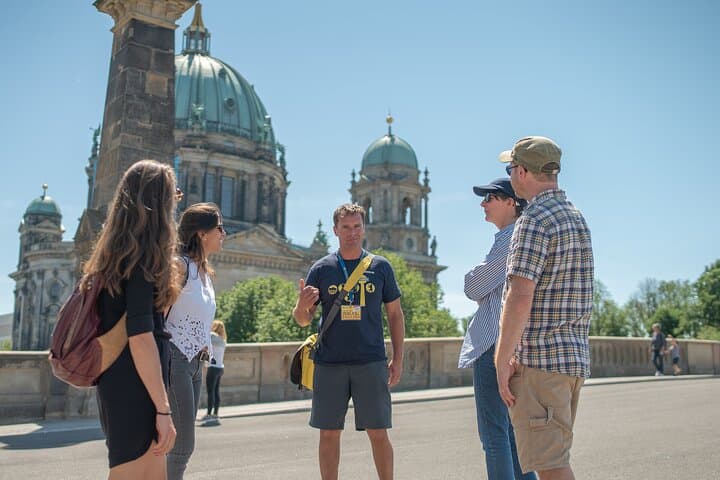
Get up close and personal with the majestic Baroque Berlin Cathedral, the biggest Protestant church in Germany. Originally a tall building rising 114 meters and heavily damaged during the war, it still impresses visitors with its monumental 98 meters. Be thrilled by the plethora of decorations outside as well as inside.
Get to see the Neues Museum (New Museum), another building on Museum Island enlisted as a World Heritage Site. The Neoclassical building was constructed due to the lack of exhibition rooms in the Altes Museum (Old Museum). For decades after WWII, it remained destroyed and was called "the most beautiful ruins in Berlin."
Stop for a moment to take a stroll along the rows of gray concrete blocks to commemorate the millions of Jews murdered by the Nazis. The seemingly endless 2,711 stelae symbolize a terrible number of people killed on a national basis. The memorial is located in the Mitte neighborhood on the former site of the Berlin Wall, as well as Hitler’s administrative center and his bunker before that.
Touch the piece of France in Berlin and savor the views near the French Church. The church was finished in 1705 by the French Huguenots. A beautiful Neoclassical building gathers visitors, tourists, and locals alike to admire its style and fascinating design.
Don’t go far from Gendarmenmarkt and marvel at the splendid exteriors of the Berlin Concert Hall; write it on your come-back list, as the hall’s acoustics were considered to be among the five best concert venues in the world. Get inspired and attuned to the creative vibe as you explore its classic sculptures of Orpheus, Euridica, Dionis, Ariadna, and others.
Make a loop around the square and return to see the monument to the outstanding German poet Friedrich Schiller. Learn about the four figures of women symbolizing inspiration for the lauded poet’s works. Get to know about his famous lines and poems as you explore a beautiful sculpture shown to the public for the first time in 1871 to commemorate Schiller’s 112th anniversary.
Ride by the building of the German Ministry of Finance. Learn about its past as the Imperial Ministry of Aviation (Reichsluftfahrtministerium), the largest administrative building in Berlin when it was constructed in 1935. A strict gray design with minimal decorations was supposed to symbolize the solidity of the Reich’s ministry headed by Goering. Learn about the army of laborers working double shifts and Sundays to finish the giant. Nowadays, it’s home to the Federal Ministry of Finance.
Reach one of the most iconic and prominent landmarks in Berlin and all of Germany. Brandenburg Gate witnessed the most important historical events in the country in the 19th and 20th centuries. The building symbolized the end of the Napoleonic Wars and the return of the Prussian army after the Battle of Paris, as well as the reunification of Germany, standing on the border of East and West Berlin. It saw Nazi troops marching in parades and debris and destruction left after WWII.
Take your best photos in front of another symbol of Berlin and its history. The Reichstag Building is undoubtedly the most famous highlight of the German capital and the main administrative building in the country. Originally built in an Italian Renaissance style, the structure burned in 1933 and was rebuilt as a bomb shelter and hospital during the war before becoming one of the sites of fierce battles.
National Socialism brought suffering and destruction to many nations and ethnic groups, including the Sinti and Roma people. Take a moment of reflection on the victims while soaking in the quiet pool in the park area just near the Reichstag Building. Feel the place while taking a little stroll with music playing, helping you immerse yourself in the right mood.
Pick one more iconic site to add to your collection of highlights, a constituent part of the city’s skyline, its symbol, and a reference point. Rising 368 meters, the TV Tower is the highest structure in Germany and the fourth-highest building in Europe. Its stunning viewpoint attracts more than 1 million visitors every year, making the landmark one of the top 10 most popular sights in Germany. The viewpoint and a bar are located at an altitude of 220 meters above the ground.
Ride across Alexanderplatz, a central square in Berlin, an important transport hub, and a historically significant landmark. Standing at the crossroads of different means of transportation, it sees over 360,000 people come and go there every day. It preserved some pre-war buildings as well as GDR architecture, such as a spinning clock and a fountain.
Take a pleasant cobblestone ride at Bebelplatz, one of the central squares of the German capital. It appeared in 1742 as the Opera Square due to the Berlin Opera Theater building. Take pictures of some amazing pre-war buildings and some structures with historical facades that replaced historical architectural ensembles. Witness a place where the notorious Nazi book burnings took place.
Reach the great historic spot that used to be the busiest square in Europe before WWII. However, the Allied bombing turned half of it into ruins. Listen to insightful information about the complex history of the place and get to know how it has become a new landmark of reunified Germany.
Arrive at the site where Hitler spent his last four months with his minions and committed suicide. The original bunker was exploded in 1947, but some parts of it survived till the present, but with no tourist admission. 2006 was the year when the place was marked with a small sign. Dive deeper into the terrifying historical events standing near the former Reichskanzlei garden.
Take a wonderful ride through the most beautiful and impressive squares in the German capital. Hold your breath as you get fascinated with the surrounding architecture, from the Concert Hall, the center of a composition, to the French and German churches.
Pass by the largest park in Berlin, also known as its "green lungs." Enjoy the quietude of the park after all the hustle and bustle of the busy city. Ride through the calm, shadowy alleys and fill your lungs with oxygen.
Reach the stunning structure of the Victory Column as you ride through Tiergarten Park. This impressive monument was originally built in 1873 at Konigplatz to celebrate the victory of Prussia in the Franco-German War as well as other battles. However, in 1938, it was relocated to Tiergarten and added one layer by Hitler’s order. Visitors can climb up 270 steps to the top of the column.
Get to see one of the last watch towers from a former border between East and West Berlin. The site attracts visitors as a historical monument to the times of the Cold War and the confrontation between two parts of Germany at the time.
Ride around Lustgarten Park on Museum Island, surrounded by splendid buildings. Admire the space for bike rides and the beautiful scenery around with fountains, trees, routes, and sometimes great musical performances.