Venice In a Day St Mark's Doges Palace Gondola Ride and City Tour
4,8 (4931)5hVenice, Italy
From€115
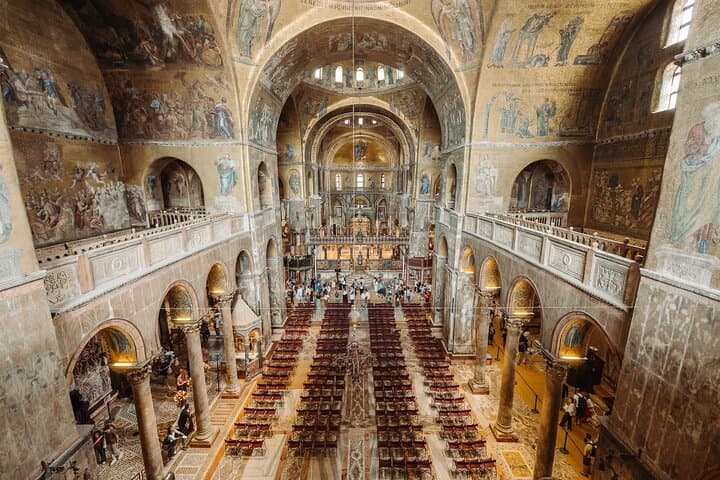
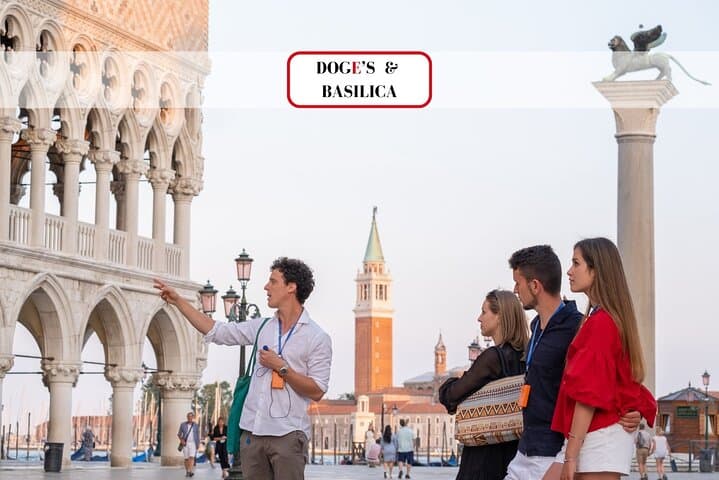
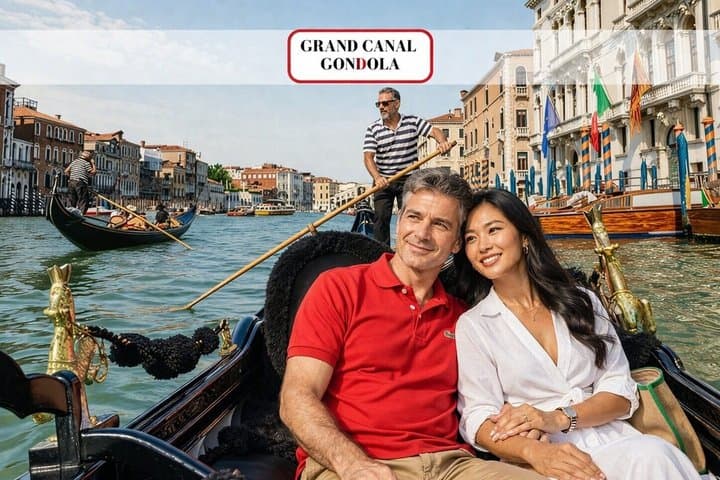
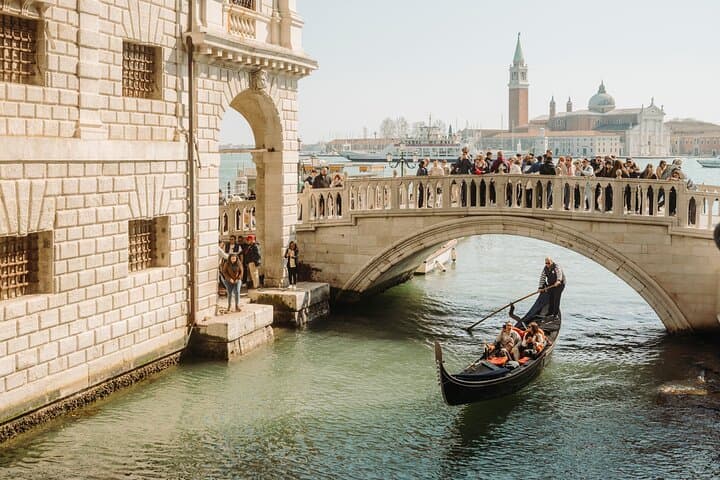
Experience a guided walking tour of Venice that includes visits to St. Mark's Square, St. Mark's Basilica, the Doge's Palace, and the Renaissance Clock Tower. This tour is suitable for those interested in history and culture but may not be ideal for individuals with mobility issues due to the amount of walking involved. Participants will stroll through the Castello district, crossing various bridges and historic squares such as Santa Maria Formosa and San Giovanni & Paolo, while learning about notable figures like Marco Polo and the city's past. Following the walking tour, guests will board a gondola at Campo San Moisè for a ride along the Grand Canal and smaller canals, taking in the sights of historic palaces. An eBook containing tips and insights about Venice will be provided to enhance the overall experience.
Explore the lesser-known streets to discover hidden squares between St. Mark's Square and the Rialto Bridge. Commence your journey from campo San Moisè, adjacent to St. Mark's Square, to delve into the city's history. Follow your guide through a maze of alleyways, squares, or "campi," and learn about the city's past, captivating stories, and the local Venetian dialect. Pause in front of the awe-inspiring La Fenice opera house to uncover its glorious yet tumultuous history. Admire the Bovolo Staircase, a splendid Renaissance masterpiece, and one of Venice's most exquisite architectural gems. This intriguing and intricate spiral staircase forms part of the Palazzo Contarini del Bovolo, dating back to 1499, located near Campo Manin.
Santa Maria Formosa is a beautiful square located in the heart of Venice, Italy. It is renowned for its historical significance and charming atmosphere. At the center of the square stands the magnificent Santa Maria Formosa Church, an architectural masterpiece dating back to the 15th century. The church's façade showcases a stunning blend of Byzantine and Renaissance styles, making it a captivating sight for visitors. Surrounded by elegant buildings and narrow streets, Santa Maria Formosa exudes Venetian charm and provides a peaceful escape from the bustling city. It is a perfect spot to wander around, soak in the local ambiance, and appreciate the unique beauty of Venice. The square's name, "Formosa," translates to "beautiful" in Italian, and it truly lives up to its name, leaving an indelible impression on all who visit.
The Rialto Bridge in Venice is an iconic landmark that spans the Grand Canal, connecting the districts of San Marco and San Polo. With its elegant arches and charming shops lining its sides, the bridge exudes Venetian beauty and history. Dating back to the 16th century, it is one of the oldest and most famous bridges in Venice, attracting tourists from around the world. From the Rialto Bridge, visitors can enjoy breathtaking views of the canal and the bustling activity of gondolas and boats passing by. It remains a symbol of Venice's rich heritage and a must-visit attraction for anyone exploring the enchanting city.
In the late 18th century, Venice boasted seven ancient theaters, two dedicated to drama and the rest to music. The most luxurious among them was the Teatro San Benedetto, located near Campo San Luca. Established by the Grimani family in 1755, it was later handed over to the Noble Society of boxholders. However, due to a judicial agreement in 1787, the society was expelled and compelled to surrender the theater to the Venier nobles, who owned the land on which the building stood. The society promptly set out to construct a new and grander theater, which would be called Gran Teatro La Fenice, like the mythical and immortal bird mentioned by Herodotus in his Histories. Just as the phoenix is capable of rising from its own ashes, this new theater would symbolize the society's rebirth from its misfortunes.
There are numerous toponymic persistences that recall a widespread presence in the past, somewhat throughout the city, of horticultural activities or in any case of undeveloped areas covered with vegetation, among which we can mention the campi, campazzi and courtyards of the grass , or the calluses of the figher. The first certain attestation of the Rio dell'Alboro dates back to 1696, while that of the Rio de le Ostreghe joins it in the following century. It is probable that a seller of these delicious seafood was stationed nearby, the cultivation of which in the lagoon had a significant boost especially in the first half of the 19th century, leaving evidence also in the ostregheri canal of the same name, today Canale dei Lavraneri, in Sacca Fisola .
Reviews are hosted by Viator
This rating summarises the reviews collected by Viator, which keeps them on its own listing. We show the average exactly as it reaches us, without the individual comments.
Read the reviews on Viator