Berlin's Best: 2 Hour Walking Tour Third Reich and the Cold War
5,0 (6204)2hBerlin, Germany
From€20
Explore Berlin with a flexible itinerary focused on its multicultural food culture. Sample popular local snacks like currywurst and dine in spots favored by Berliners. Walk through neighborhoods featuring charming shops and small grocery stores. View the city's renowned street art and discover lesser-known artistic treasures. Learn about the history of Kreuzberg and its evolution. This experience includes visits to various locations such as Kreuzberg, Potsdamer Platz, Anhalter Bahnhof, Mehringdamm, Curry 36, Riehmers Hofgarten, Bergmann-Kiez, Marheineke Markthalle, Südstern, Graefe-Kiez, Admiralbrücke, Kottbusser Tor, and Oranien-Kiez. The tour is suitable for those interested in food, culture, and history, but may not suit those seeking a more traditional sightseeing experience.
The Brandenburg Gate made of sandstone is one of the largest and most beautiful creations of German classicism. It was built in the years 1788 to 1791 based on designs by Carl Gotthard Langhans the Elder, who was strongly oriented towards the propylaea of the Athens Acropolis. King Friedrich Wilhelm II had previously ordered the construction of the Brandenburg Gate because he was looking for a worthy architectural conclusion for the boulevard Unter den Linden.
History of the zoo At the end of the 17th century, Elector Friedrich III. create a "pleasure park for the population" from the former hunting ground. Over time, the park was redesigned according to several models, including Between 1833 and 1838 the famous landscape designer Peter Joseph Lenné transformed the zoo into an English public park. Sights in the Tiergarten But it is not just trees, shrubs and green spaces that determine the face of the approximately 200-hectare zoo. Many sights such as monuments and memorials, bridges, the Victory Column, the Federal President's Office, the House of World Cultures or the English Garden invite you to take a day stroll through the park. The English garden created around a pond gives an insight into the English landscape architecture and is today one of the most beautiful corners of the zoo.
Potsdamer Platz was planned as an entire district by architects. With success - the cafes, cinemas and shops between the futuristic high-rise buildings are used by Berliners and tourists alike. The city planners' calculation worked: The Berliners have accepted the cafes, cinemas and the large shopping arcade of the new Daimler City very well. A whole new district was created on 6.8 hectares between Potsdamer Platz and Reichpietschufer.
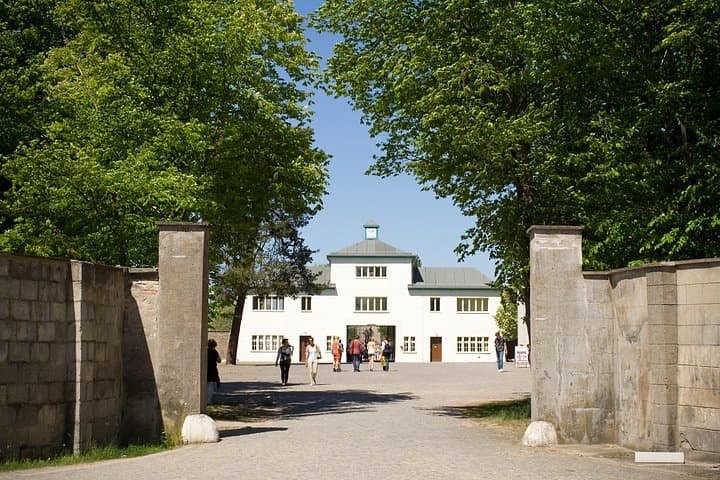
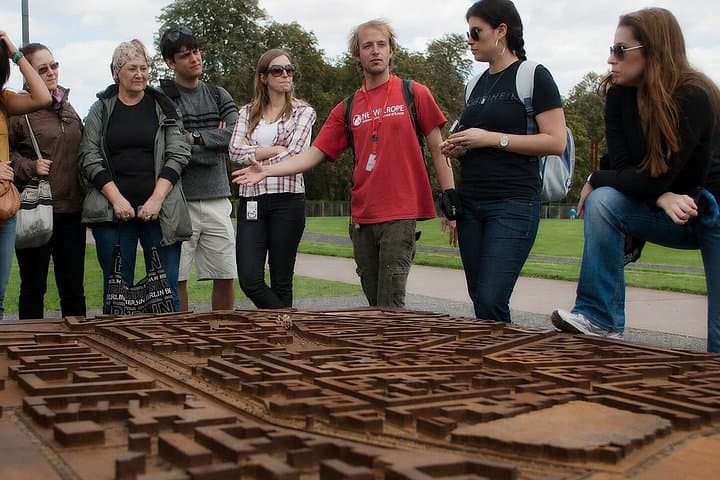
The area, which became known as the "Topography of Terror" in 1987, was the central location for the planning and control of most Nazi crimes. Between 1933 and 1945, the most important institutions of the National Socialist terror apparatus of the SS and police were housed here with the Secret State Police Office, the Reichsführung SS and the Reich Security Main Office.
The Martin-Gropius-Bau is dedicated to cultural history, contemporary art and photography.
Wall
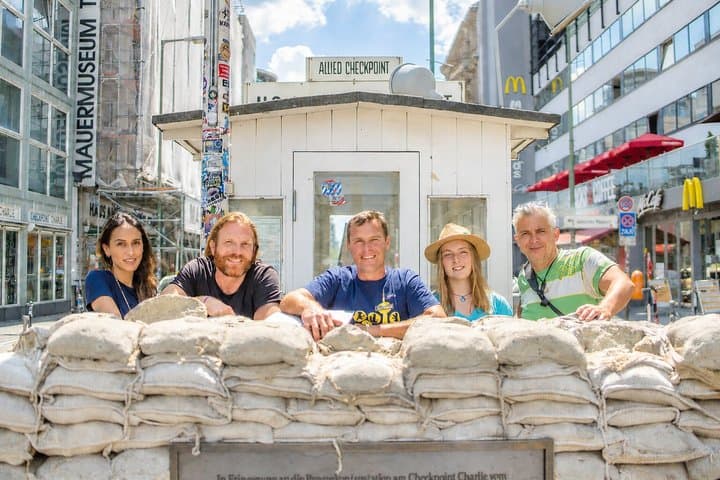
Friedrichstrasse runs through Berlin as a north-south axis. A popular shopping mile developed between Checkpoint Charlie and Friedrichstrasse station after the fall of the wall.
The square was created at the end of the 17th century according to plans by Johann Arnold Nering. At that time, French immigrants, mainly French Protestants (Huguenots), settled in this area. The market place was first called Esplanade, then in chronological order Lindenmarkt, Friedrichstädtischer Markt and Neuer Markt. Finally it was renamed Gendarmenmarkt in 1799, since from 1736 to 1782 the guard and the stables of the "Gens d'armes" ward regiment were located there.
The permanent exhibition "Ways - wrong trails - detours" in the German Cathedral shows the historical development of liberal parliamentary democracy in Germany on five floors.
The Konzerthaus am Gendarmenmarkt is a masterpiece of classicist architecture and is one of Karl Friedrich Schinkel's main works. As early as 1776, at the instigation of Frederick the Great, a small comedy house was opened here, which was designed according to the plans of the Prussian director of construction, Johann Bouman the Elder. was built. The renaming to the Royal National Theater in 1787 illustrated the rise to one of the leading theaters in the country
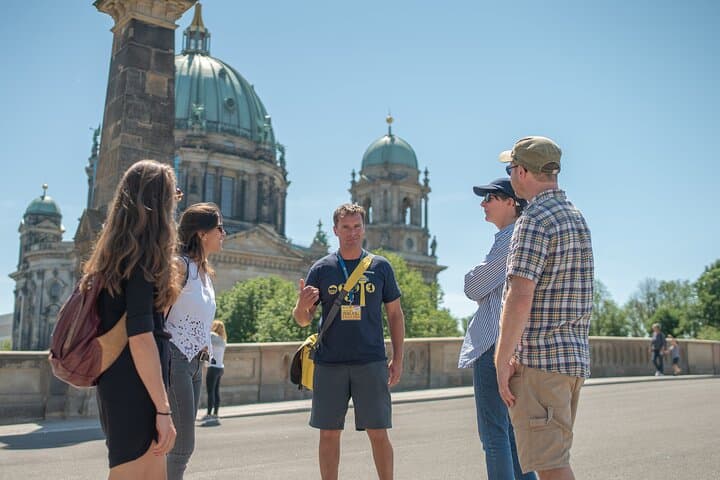
With its striking dome, the mighty Berlin Cathedral in the center of Berlin is hard to miss. As the former court and cathedral church of the Hohenzollerns, the cathedral was rebuilt between 1894 and 1905 under Emperor Wilhelm II.
The Nikolaiviertel on the Spreeinsel is a kind of open-air museum of the destroyed old Berlin. In its current form, it was created for the 750th anniversary of Berlin in 1987. The Nikolaikirche in the Nikolaiviertel
The Neptune Fountain in front of the Red City Hall is known to Berliners as "Forckenbecken". This term was right in two ways: on the one hand, the then mayor of Berlin was called Forckenbeck, and on the other hand, the terminology fits perfectly with the fountain itself, because Neptune is standing in a basin with his trident. The four female figures at his feet symbolize the rivers Elbe, Rhine, Oder and Vistula.
The East Side Gallery is a painted 1.3 kilometer section of the former Berlin Wall along the Spree. With over a hundred original wall paintings, it is the longest open-air gallery in the world.
One of the most important inner-city canals in Berlin flows straight through the districts of Treptow, Kreuzberg, Neukölln, Tiergarten and Charlottenburg. Berlin's first artificial waterway has been part of the cityscape since the 19th century. At that time, with the growing industrialization, the need for transport was increasing, road and rail were no longer sufficient. In 1841, the city planner and master gardener Peter Joseph Lenné was commissioned by King Friedrich Wilhelm IV to design a new transport canal near the then urban area. The construction of the 10.74 km long canal started in 1845 and was completed in 1850. Just a few years later, the Landwehr Canal proved to be indispensable for the transport of building materials for the rapid development of Berlin in the Gründerzeit.
Popular meeting place in summer When summer is over Berlin and the evenings are long, bright and warm, the old bridge with its cobblestone streets and old gas lanterns becomes a popular meeting place for Berliners and tourists. The Admiralbrücke is an island of big city romance and attracts numerous people in the summer months. As the sun goes down, fragments of English, Spanish and Italian words waft through the evening and small groups enjoy the cozy atmosphere on the Admiralsbrücke. Many sit together on the bollards and the paving stones to talk, have a drink, make music and admire the sunset over the Landwehr Canal. After local residents complained about the nightly volume, the bridge was cleared peacefully every evening at 10 p.m. with the support of the police.
The former Tempelhof Airport with the large check-in hall and its more than 300-hectare airfield was opened to the public in May 2010 after flight operations had ceased. As "Tempelhofer Feld", the site is to be carefully redesigned into a park that can be used in a variety of ways with the participation of the citizens. Development of the Tempelhof Park After the successful referendum in May 2014, the Tempelhof Field Law (ThFG) came into force in June 2014. This sees i.a. proposes that a development and care plan with the participation of the population is to be drawn up for the future use and further development of the open space at Tempelhofer Feld.
Reviews are hosted by Viator
This rating summarises the reviews collected by Viator, which keeps them on its own listing. We show the average exactly as it reaches us, without the individual comments.
Read the reviews on Viator