Alhambra & Generalife Skip the line Small Group including Nasrid Palaces
4,7 (3327)3hGranada, Spain
From€59
This self-guided walking tour of Granada allows you to explore the city independently using an audio guide on your smartphone. The tour lasts approximately 2-3 hours and is suitable for individuals or small groups who wish to see key landmarks at their own pace. The route begins at Granada train station and concludes at the San Nicolás observation deck, including sites like Granada Cathedral, Royal Chapel, Moorish Gate, Dar al-Horra Palace, Granada Arena, Alhambra Fortress, and the streets of the Arabian market. The app can be downloaded for offline use, and the audio is accessible through headphones, providing stories and insights without the constraints of a guided group. This experience is ideal for travelers with limited time in Granada.
The Monumento a los Emigrantes in Granada, Spain, is a modern bronze sculpture located near the city’s Paseo del Violón. It honors the thousands of Andalusians who emigrated in search of better opportunities, especially during the 20th century. The artwork portrays a family in motion—suitcases in hand, gazes turned toward an uncertain future — capturing both the hardship and hope of leaving home. It's a moving tribute to resilience, memory, and the personal cost of migration, set quietly amid the city’s contemporary flow.
The Plaza de Toros de Granada, built in 1928, is one of Spain’s most beautiful bullrings, showcasing Neo-Mudéjar architecture with horseshoe arches and intricate brickwork. Located in the Beiro district, it seats around 14,000 spectators and has hosted not only traditional corridas, but also concerts and cultural events. While bullfighting remains controversial, the arena itself stands as a striking example of Andalusian heritage — where architecture, ritual, and spectacle converge in the rhythms of southern Spain.
The Puerta de Elvira is a monumental Moorish gate that once marked the main entrance to the city of Granada during the Nasrid period. Built in the 11th century and later expanded, it was part of the city’s medieval defensive walls and led directly to the old Muslim quarter of Albayzín. Though only a fragment remains today, its pointed arch and weathered stone speak to centuries of cultural layering. Once a threshold between city and empire, the gate now stands quietly at the edge of modern Granada, anchoring it to its Islamic past.
The Basílica de San Juan de Dios in Granada is a breathtaking example of Spanish Baroque architecture, built in the 18th century to honor St. John of God, founder of the Hospitaller Order. Behind its restrained stone façade lies a lavish interior filled with gilded altars, swirling columns, frescoed domes, and a dazzling display of relics. The saint’s silver-embellished tomb rests in the richly decorated sanctuary. More than a church, it’s a theatrical expression of faith — where devotion, art, and grandeur unite in overwhelming splendor.
The Granada Cathedral, officially the Cathedral of the Incarnation, is a monumental symbol of Spain’s shift from Moorish rule to Catholic grandeur. Built on the site of a former mosque, it began in the early 16th century under Queen Isabella and blends Gothic, Renaissance, and Baroque styles. Its soaring white interior, massive pillars, and dramatic main altar reflect the triumph of the Christian Reconquista. Highlights include works by Alonso Cano and the adjacent Royal Chapel, where the Catholic Monarchs are buried. It’s both a spiritual center and an architectural statement of power and faith.
The Royal Chapel of Granada (Capilla Real) is the final resting place of Queen Isabella I and King Ferdinand II, the Catholic Monarchs who completed the Reconquista. Built in the early 16th century in Isabelline Gothic style, it stands beside Granada Cathedral as a powerful symbol of Spain’s imperial beginnings. Inside lie marble tombs, royal flags, and a treasury holding Isabella’s personal belongings. This sacred space, austere yet grand, marks the end of Muslim rule in Spain and the dawn of a unified Catholic kingdom — etched in stone and legend.
Plaza Nueva (New Square) is ironically Granada’s oldest square, dating back to the early Christian era after the Reconquista. Nestled between the Albaicín and the Alhambra, it has long been a civic and social hub. Framed by historic buildings like the Royal Chancery and several noble houses, it once hosted tournaments and public trials. Today, it’s a popular meeting point, surrounded by cafés and tapas bars, with the Darro River flowing beneath its stone surface. From here, Granada's past and present flow together, step by cobbled step.
The Eye of Granada (Ojo de Granada) is not a formal monument but a poetic nickname often used for Mirador de San Nicolás, the city's most famous viewpoint. Perched in the Albaicín quarter, it offers a panoramic gaze over the Alhambra, framed by the Sierra Nevada mountains. Especially breathtaking at sunset, it draws travelers, street musicians, and locals alike. From this “eye,” one sees not just architecture or landscape, but centuries of conquests, cultures, and quiet beauty — held in a single, unforgettable view.
The Dar al-Khorrah Palace, also known as Casa del Chapiz, is a historic Moorish-style residence located in the Albaicín district of Granada. Originally built in the 14th century and later adapted after the Christian conquest, it blends Nasrid and Mudéjar elements with later Renaissance touches. With its serene patios, carved woodwork, and views of the Alhambra, it embodies the layered architectural dialogue between Islamic and Christian traditions. Today, it houses the School of Arabic Studies, preserving both knowledge and beauty in one of Granada’s most atmospheric corners.
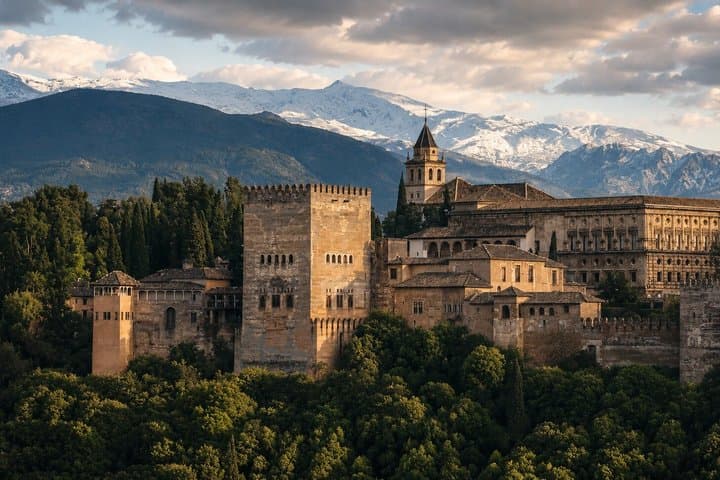
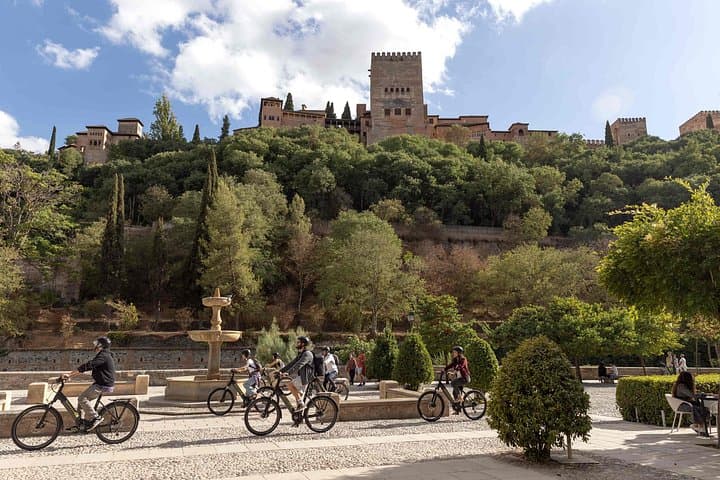
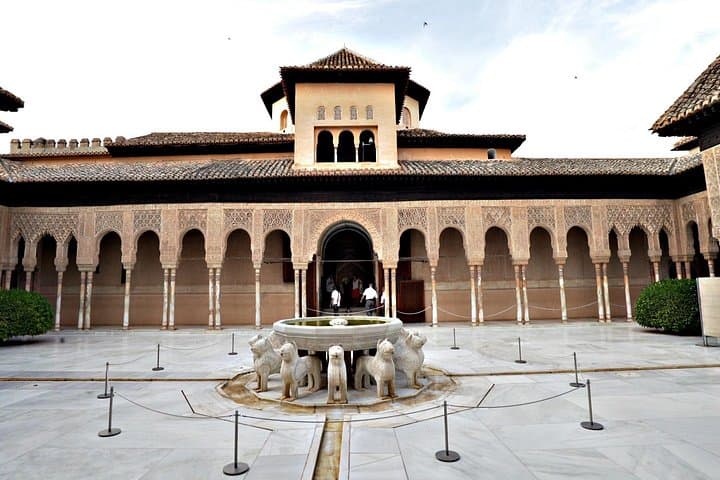
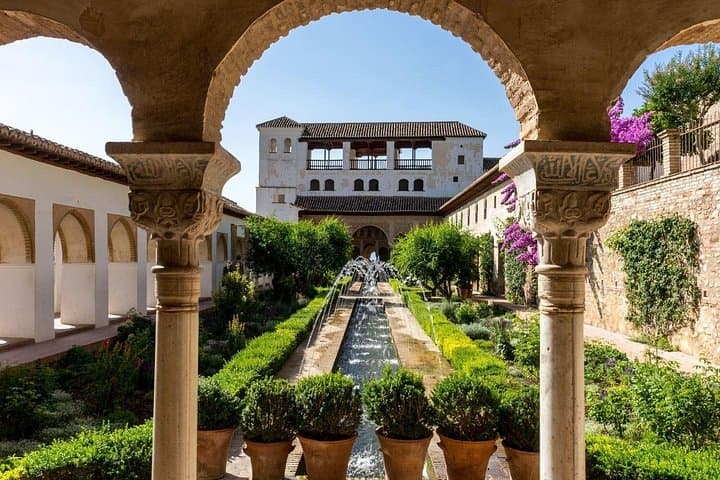
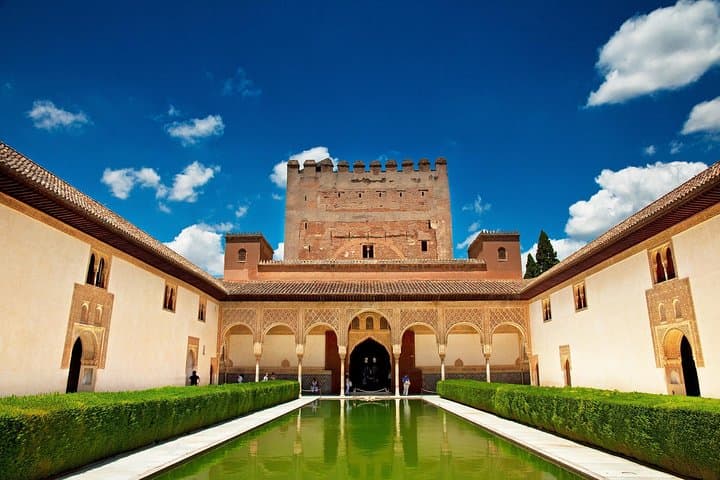
The Alhambra is Granada’s crown jewel — a vast hilltop palace and fortress complex that served as the seat of the Nasrid dynasty, the last Muslim rulers in Spain. Built between the 13th and 15th centuries, it is a masterpiece of Islamic architecture, famed for its delicate stucco work, arabesque patterns, and poetic inscriptions. Highlights include the Palace of the Lions, the Hall of the Ambassadors, and the Generalife gardens. Beyond its beauty, the Alhambra is a palimpsest of cultures, where Moorish refinement, Christian conquest, and romantic myth all converge.
Reviews are hosted by Viator
This rating summarises the reviews collected by Viator, which keeps them on its own listing. We show the average exactly as it reaches us, without the individual comments.
Read the reviews on Viator