Sevilla Food Tour: Tapas, Wine, History & Traditions
4,9 (6362)3h30Seville, Spain
From€69
This tour involves a two-hour walking exploration of Seville's main monuments, guided by a private expert who can customize the experience based on your group's interests. It is suitable for those looking to gain a comprehensive overview of the city's 3,000 years of history and heritage. If the primary guide is unavailable, another qualified guide will conduct the tour, ensuring a quality experience.
The tour will start in Plaza de San Francisco, one of the oldest and busiest squares in the city. Here, you'll find the City Hall of Seville, a Renaissance building from the early 16th century.
One of the main streets in the city, which showcases a great collection of regionalist-style buildings, typical of southern Spain from the early 20th century.
Seville Cathedral is considered the largest Gothic temple in the world and offers a great architectural mix, reflecting the different styles and previous uses the Cathedral had, such as the Main Mosque during the Muslim era.
A minaret tower built in the 12th century during the Muslim era to call the faithful to prayer, which now serves as the bell tower of Seville Cathedral.
One of the main squares in the city, surrounded by Seville's main monuments classified as UNESCO World Heritage Sites: the Cathedral, the Royal Alcazars, and the General Archive of the Indies.
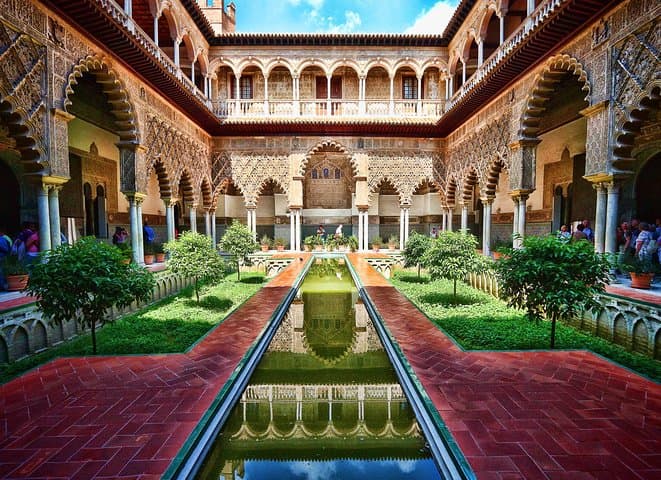
The oldest active royal palace in Europe, built during the Muslim era and later reused by Christian monarchs after the conquest of Seville.
Built in the late 16th century to house trade-related documents from the Indies (America), as the port of Seville was the connection between Europe and the American continent for 200 years. Today, the building serves as an archival repository of information related to the discovery of America.
One of the city's nerve centers and the location of one of the entrances to ancient Seville.
An 18th-century building and the former tobacco factory of the city, now the University of Seville. It was the workplace of the famous cigarette makers who inspired the popular opera Carmen.
Our last stop will be at one of the most iconic places in the city, Plaza de España. Main construction of the Ibero-American Exhibition held in 1929, historical landmark that undoubtedly transformed the city of Seville, offering one of the most beautiful and photographed pictures by visitors.
Reviews are hosted by Viator
This rating summarises the reviews collected by Viator, which keeps them on its own listing. We show the average exactly as it reaches us, without the individual comments.
Read the reviews on Viator