Valencia Old Town Tour with Wine & Tapas
5,0 (3710)4hValencia, Spain
From€75
This 2-hour Tuk Tuk tour in Valencia takes you through the city's historic center, showcasing its iconic monuments and charming squares. You will visit the spectacular Turia River Garden and explore various corners that highlight Valencia's traditions. This experience is suitable for those looking to learn about the city's history and culture while enjoying its views. Before booking, note that this tour is designed for cruisers, and it is advisable to check the departure points and times.
Trinity Bridge is one of the oldest and most emblematic historic bridges in Valencia. Built in stone between the 15th and 16th centuries, it crosses the ancient riverbed of the Turia River and stands out for its elegant Gothic architecture and the sculptures that guard its approaches. Over the centuries, it has been an important connecting road between the historic center and the northern part of the city. From this point you can enjoy pleasant views of the Turia Gardens and discover an essential part of the historical and cultural heritage of Valencia.
The Convent of Santo Domingo is one of the most important monumental complexes in Valencia and a prominent example of the evolution of Valencian architecture over the centuries. Founded in the 13th century, the building houses spaces of great historical and artistic value, such as the Gothic Cloister, the Patio de los Naranjos and the Chapel of the Kings. It is currently the headquarters of the Captaincy General of Valencia, combining its institutional function with an extraordinary heritage legacy. Its rich history, linked to the Crown of Aragon and important events in the city, makes it an essential visit to learn about Valencia’s historical and cultural past.
The Bancaja Foundation is one of the main cultural centers of Valencia and a reference in the dissemination of art, culture and heritage of the Valencian Community. Housed in an elegant historic building, the institution hosts temporary exhibitions by national and international artists, as well as a wide range of cultural, educational and musical activities. Its commitment to promoting art and preserving the cultural legacy has made it a space of great relevance to the cultural life of the city and a point of interest for those who wish to discover Valencia’s artistic wealth.
The Puerta del Mar is one of the most representative monuments in Valencia and a symbol of the ancient wall that surrounded the city. Built in the 20th century as a tribute to the historic gate that gave access to the road to the port, this elegant memorial arch has become an important urban landmark. Located in one of the most emblematic squares of the city, Puerta del Mar connects the historic center with the gardens and avenues that emerged after the disappearance of the walls. Its historical and symbolic value makes it an ideal place to discover the evolution of Valencia and its close relationship with the sea.
The Bridge of Flowers – Mayor Rita Barberá is one of the most unique and colorful bridges in Valencia. Opened in 2002, it crosses the old riverbed of the Turia River and stands out for its characteristic floral decoration, which changes throughout the year and turns this space into an authentic outdoor garden. Its design and careful ornamentation have transformed it into one of the most photographed places in the city and a symbol of Valencia’s commitment to its green spaces and urban landscape. From the bridge you can also enjoy excellent views of the Turia Gardens and some of the main enclaves of the city.
The Military Historical Museum of Valencia is a space dedicated to the conservation and dissemination of Spanish military heritage. Housed in an old barracks from the 19th century, the museum houses a wide collection of uniforms, weapons, documents, models and historical pieces that allow you to trace the evolution of military history from different times. Its exhibitions offer a didactic insight into the role of the Armed Forces and their relationship to the history of Valencia and Spain. Thanks to its valuable heritage and its informative character, the museum has become an interesting cultural point of interest for those who want to know a different facet of the history of the city.
The Mestalla Football Stadium is one of the most emblematic stadiums in Spain and the historic home of the Valencia Football Club since 1923. With more than a century of history, it has been the scene of countless national and international meetings, as well as important sporting events that have marked the trajectory of Spanish football. Its characteristic structure, with stands very close to the pitch, creates a unique atmosphere and makes it one of the most personal stadiums in the country. Beyond its sporting relevance, Mestalla is a symbol of Valencia’s identity and a must for football fans and those who want to know one of the great sporting references of the city.
Avenida de Blasco Ibáñez is one of Valencia’s main arteries and one of the most representative roads of the city’s urban expansion to the sea. Named after the Valencian writer and politician Vicente Blasco Ibáñez, this wide avenue stands out for its landscaped areas, its buildings of different architectural styles and its lively urban life. Along its route are important educational, cultural and health centers, including several campuses of the Universitat de València, which gives it a dynamic and cosmopolitan atmosphere. Its historical relevance and its role as a connection axis between the city center and the maritime area make it a key place to understand the evolution of contemporary Valencia.
The Marina de València is one of the most dynamic and emblematic areas of the city, located next to the Mediterranean and closely linked to the Valencian maritime tradition. Formerly mainly dedicated to port activity, this area has undergone a major urban transformation into a modern space for leisure, culture, sport and innovation. Its piers, promenades and buildings of contemporary architecture offer a privileged setting to enjoy the sea and some of the best views of the Valencian coast. Thanks to its combination of heritage, nautical activity and cultural offer, La Marina de València has established itself as one of the main meeting points and one of the most attractive areas of the city.
The Tinglado 2 is one of the most representative historic buildings of the Marina de València and an outstanding example of the port architecture of the early twentieth century. Built as part of the old infrastructure for storage and commercial activity of the port, this unique building stands out for its open structure and decorative elements of modernist inspiration. Located in the surroundings of the former Royal Marina Juan Carlos I, Tinglado 2 has been recovered as a multifunctional space dedicated to holding exhibitions, cultural events and activities of a social and recreational nature. Its heritage value and privileged location by the sea make it an emblematic place to discover the evolution and transformation of Valencia’s maritime front.
La Pamela is one of the most unique and recognizable constructions in La Marina de València. Located next to the old harbor docks, this characteristic circular and covered structure has become a reference point of the seafront of the city and a symbol of the transformation of this space into an environment dedicated to leisure, culture and citizen activity. Its privileged location, overlooking the port and the Mediterranean, makes it an ideal place to enjoy the maritime atmosphere and some of the most emblematic corners of La Marina de València.
The Veles e Vents Building is one of Valencia’s contemporary architectural icons and one of the most emblematic constructions of La Marina de València. Designed with an innovative concept of overlapping platforms that seem to float over the sea, the building was created on the occasion of the America’s Sailing Cup and has become a symbol of the renewal of the city’s seafront. Its avant-garde architecture and privileged location offer spectacular views of the port and the Mediterranean. Currently, Veles e Vents is a space dedicated to culture, gastronomy and events, consolidating itself as one of the main meeting points and references of modern Valencia.
Playa de las Arenas is one of the most emblematic urban beaches in Valencia and one of the main meeting points between the city and the Mediterranean Sea. It stands out for its wide expanse of golden sand, its calm waters and its lively promenade, which houses a varied range of restaurants, terraces and leisure spaces. Historically linked to the maritime and tourist development of Valencia, this beach has been established as an ideal place to enjoy the Mediterranean climate and the coastal environment of the city. Its excellent location and services make it one of the most appreciated destinations for both residents and visitors.
The City of Arts and Sciences is one of the most emblematic architectural and cultural complexes in Valencia and one of the main references of contemporary architecture in Europe. Situated on the ancient riverbed of the Turia River, this impressive complex stands out for its avant-garde design, wide open spaces and unique integration with the environment. The complex brings together spaces dedicated to scientific outreach, culture, nature and entertainment, becoming an important center of knowledge and leisure for visitors of all ages. Its innovative architecture and multidisciplinary character have made the City of Arts and Sciences a symbol of modern Valencia and an essential visit to discover the city.
The Bridge of Azud del Oro is one of the most outstanding works of engineering in contemporary Valencia and one of the most recognizable elements of the city’s urban landscape. Situated on the ancient riverbed of the Turia River, this cable-stayed bridge stands out for its imposing sloping pylon and avant-garde design, which blends harmoniously with the surroundings of the City of Arts and Sciences. Opened at the beginning of the 21st century, it has become a symbol of Valencia’s urban and architectural transformation, as well as offering a privileged perspective on some of the city’s most iconic spaces. Its unique aesthetics and relevance within modern Valencian architecture make it a must-see point of interest.
The Oceanogràfic is the largest aquarium in Europe and one of the main references for marine outreach and the conservation of aquatic ecosystems. Integrated into the City of Arts and Sciences of Valencia, this spectacular complex houses a wide representation of marine habitats from different regions of the planet, allowing visitors to discover the extraordinary diversity of marine life. Its innovative facilities, designed to recreate different ecosystems, combine entertainment with education and environmental awareness. Thanks to its unique architecture and important scientific and outreach work, the Oceanogràfic has established itself as one of the most emblematic and visited attractions in Valencia.
The Science Museum is one of the most emblematic spaces of the City of Arts and Sciences of Valencia and a reference in scientific and technological dissemination. Conceived as an interactive museum, it offers a dynamic and participatory experience that invites you to discover the world of science, innovation and knowledge through exhibitions and activities for all ages. Its unique futuristic-inspired architecture and extensive exhibition spaces make it one of the most representative buildings in contemporary Valencia. Thanks to its educational and informative approach, the Science Museum has established itself as a must-see for those who wish to explore science in an entertaining and accessible way.
L'Umbracle is a unique landscaped walk and viewpoint located in the City of Arts and Sciences of Valencia. Conceived as an open space dedicated to Mediterranean landscaping, it stands out for its elegant structure of white arches and for housing a careful selection of native plants and species. Its tour offers a privileged perspective of the architectural complex and the surrounding ponds, making it one of the most photogenic places in the complex. The combination of nature, art and contemporary architecture makes L'Umbracle a unique space, ideal to enjoy a pleasant walk and discover one of the most representative images of modern Valencia.
Colón Market is one of Valencia’s most emblematic modernist buildings and a prime example of Valencian architecture in the early 20th century. Built as a sourcing market, its elegant iron, brick and ceramic structure stands out for its rich ornamental details and its great heritage value. After a careful rehabilitation process, the building has been transformed into a lively space dedicated to gastronomy, leisure and culture, becoming a meeting point for both residents and visitors. Its unique architectural beauty and cosmopolitan atmosphere make Columbus Market a must-see to discover one of the jewels of Valencian modernism.
Valencia’s Bullring is one of the city’s most emblematic buildings and an outstanding example of 19th century neoclassical architecture. Inspired by ancient Roman amphitheatres, its imposing circular structure and elegant design make it one of the most representative monuments of Valencian heritage. Throughout its history, this precinct has hosted numerous cultural, festive and social events, playing a prominent role in the life of the city. Its historical, architectural and cultural relevance makes it a place of great interest to know the traditions and evolution of Valencia.
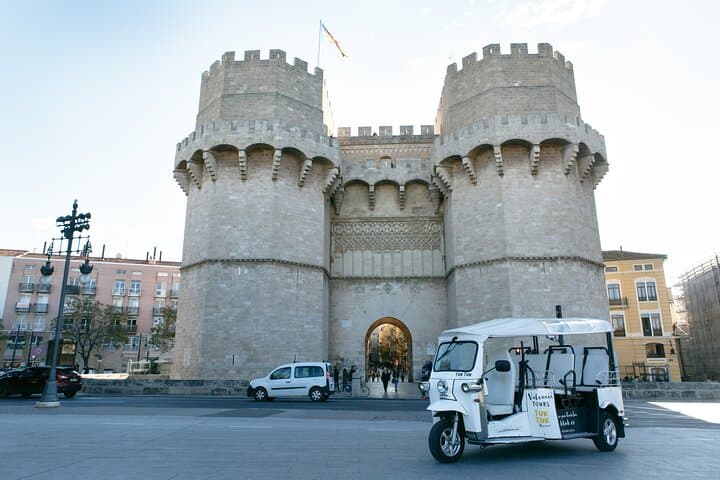
The Quart Towers are one of the most impressive and well preserved monumental gates of the old Valencian wall. Built in the 15th century with a marked defensive character, these imposing Gothic-style towers were part of the fortification system that protected the city and constituted one of its main access points. Its walls still show the traces of ancient artillery impacts, testimony to the historical events that marked Valencia’s past. Next to the towers there are also some of the last few meters of the medieval Christian wall, a valuable vestige that allows you to understand the dimension and importance of the walled enclosure that surrounded the city for centuries. This complex is one of the main symbols of Valencia’s historical and defensive heritage and an essential visit to learn about its urban evolution and medieval legacy.
The Museum of Prehistory of Valencia is one of the main centers dedicated to the study and dissemination of the oldest past in the province of Valencia. Its collections trace thousands of years of history, from the first prehistoric communities to the Iberian and Roman cultures, through a valuable selection of archaeological pieces, everyday objects and finds of great historical relevance. The museum offers a complete overview of the evolution of the societies that inhabited this territory, combining scientific rigor with a didactic approach accessible to all audiences. Thanks to its important conservation and research work, it has established itself as an essential cultural and archaeological reference to discover the origins and the oldest history of Valencia.
The IVAM (Institut Valencià d'Art Modern) is one of the most important museums of modern and contemporary art in Spain and a cultural reference of the city of Valencia. Opened in 1989, it was one of the first Spanish centres dedicated exclusively to the dissemination, conservation and research of 20th and 21st century art. Its collection brings together works by leading national and international artists, as well as hosting temporary exhibitions, educational activities and cultural innovation projects. Its commitment to contemporary creation and artistic thinking has made IVAM an essential space to discover the trends and movements that have marked modern and contemporary art.
Reviews are hosted by Viator
This rating summarises the reviews collected by Viator, which keeps them on its own listing. We show the average exactly as it reaches us, without the individual comments.
Read the reviews on Viator