Valencia Old Town Tour with Wine & Tapas
5,0 (3710)4hValencia, Spain
From€75
This self-guided audio tour app allows you to explore Valencia, Spain's third-largest city, at your own pace. The tour begins at the Ciudad de las Artes y las Ciencias, featuring Santiago Calatrava's distinctive architecture. You'll walk through the Old Town, home to the Gothic Silk Exchange, a symbol of Valencia's trading history. The tour includes climbing the Miguelete and visiting the cathedral, which claims to house the Holy Grail. You'll also visit the Central Market, where numerous vendors offer local produce. The route includes a stroll through the Turia Gardens, a 9km park created from the diverted river, connecting the beaches to the historic center. The experience continues in the Barrio del Carmen, known for its street art and nightlife, before concluding at Malvarrosa beach. This tour is suitable for independent travelers who prefer to explore at their own pace. Note that it does not include any guided services or transportation.
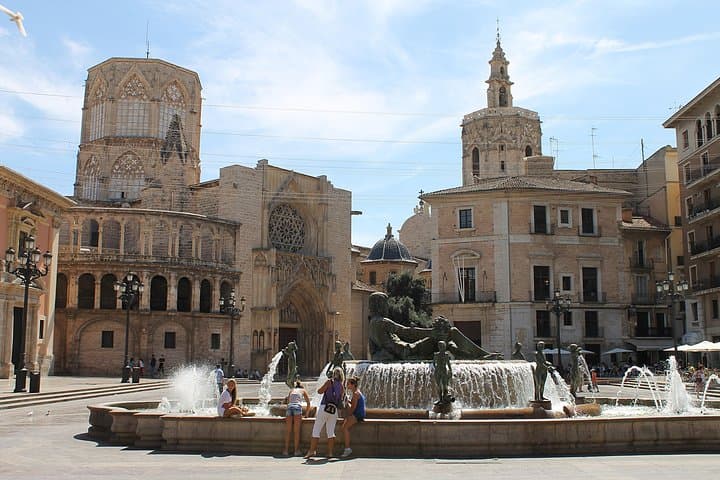
Valencia's cathedral blends Romanesque, Gothic, Renaissance, and Baroque elements accumulated over centuries of construction, but the main draw is the Santo Cáliz chapel where an agate cup claimed to be the Holy Grail has been venerated since arriving from a Pyrenean monastery in 1437. Historians consider this 1st-century vessel among the most credible Grail candidates, and Pope John Paul II celebrated mass with it during his 1982 visit. The Miguelete bell tower's 207 steps reward climbers with 360-degree views while the cathedral museum displays Goya paintings and spectacular religious art.
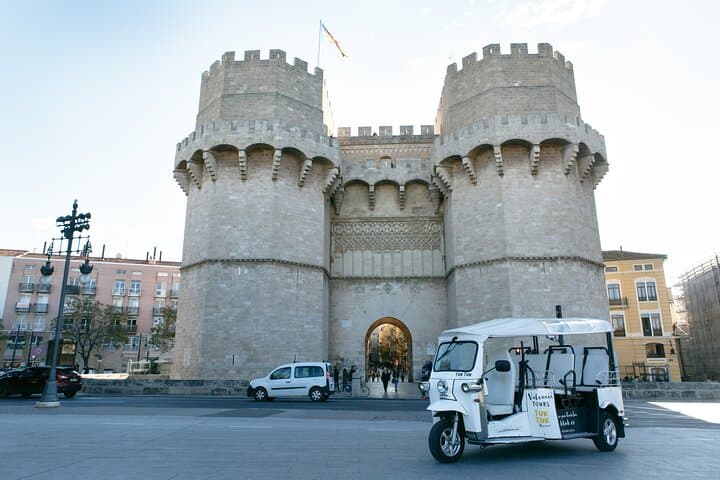
This Gothic masterpiece served as Valencia's silk trading hall during the 15th and 16th centuries when the city rivaled Venice and Florence as a Mediterranean commercial power. The UNESCO World Heritage Site's soaring columns twist upward like palm trees in the main trading hall while gargoyles and carved inscriptions decorate facades that combine civic pride with moral admonition. The building represents the golden age of Valencian trade and the civic architecture that Mediterranean merchant cities created to celebrate and regulate commerce.
Valencia's bohemian heart occupies the medieval quarter where narrow streets, ancient churches, and sections of the Moorish and Christian walls create an atmospheric labyrinth now filled with street art, vintage shops, and the bars that fuel the city's legendary nightlife. The neighborhood's transformation from working-class district to creative hub has made it essential for experiencing contemporary Valencia, with galleries, design studios, and restaurants occupying renovated historic buildings. Daytime exploration reveals architectural treasures while evening visits unlock the terrace bars and clubs that keep Carmen lively until dawn.
Santiago Calatrava's visionary complex of museums, concert halls, and aquarium has transformed Valencia's image since opening in 1998, its sweeping white structures rising from azure reflecting pools in forms that suggest dinosaur skeletons, opening eyes, and organic shapes from science fiction. The complex includes the Oceanogràfic (Europe's largest aquarium), Hemisfèric IMAX theater, Príncipe Felipe science museum, and the Palau de les Arts opera house, each building a sculptural masterpiece regardless of what's inside. The surrounding landscape architecture creates one of Spain's most photogenic destinations, particularly dramatic at night when lighting transforms the complex into a luminous dreamscape.
The nine-kilometer park created in the former Turia riverbed after devastating 1957 floods diverted the river has become Valencia's beloved green spine, connecting the historic center to the sea through playgrounds, sports facilities, and gardens designed by different landscape architects. The park's shaded paths attract joggers, cyclists, and families while Gulliver Park's giant reclining figure provides climbing adventures for children and photo opportunities for all ages. The gardens' position below street level and historic bridge crossings create a linear oasis that offers escape from traffic and heat while providing the most pleasant route between the Old Town and the City of Arts and Sciences.
Valencia's trendiest neighborhood has transformed from working-class district to creative hub, its grid of streets south of the train station now packed with independent boutiques, specialty coffee roasters, and the restaurants that have made Valencia a European gastronomic destination. The neighborhood's Moorish name (from a 9th-century royal garden) hints at deep history, but today's Ruzafa belongs to young creatives who have opened studios, co-working spaces, and the hip bars that keep the area lively until late. The Ruzafa Market and surrounding streets provide the best food shopping outside the Central Market while the multicultural population maintains the authentic urban character that gentrification threatens.
This small town just north of Valencia has cultivated the chufa (tiger nut) used to make horchata for over a thousand years, its horchaterías serving the authentic iced drink that has refreshed Valencians since the Moors introduced the crop. The traditional establishments of Alboraya offer horchata alongside fartons (elongated sweet buns for dipping) in an experience that combines refreshment with agricultural heritage. The surrounding huerta farmland—the irrigated gardens that have fed Valencia since Roman times—can be explored by bicycle or on foot, revealing the agricultural traditions that produce the ingredients for Valencia's celebrated cuisine.