Paris on the day: what you can still book at 3pm
It is three in the afternoon, you are in Paris, and the day has no plan. The good news is that Paris takes better to improvisation than its reputation suggests — as long as you know what has already gone.
What goes first, and why
The timed-entry monuments fill first: the Eiffel Tower, the Louvre, the Catacombs, the Sainte-Chapelle. This is not popularity, it is arithmetic. These sites sell a finite number of places per half hour, and that constraint exists to protect the inside of the building, not to manufacture scarcity. When the day's slots are gone they are gone for everyone and through every channel: there is no hidden reserve one site can open and another cannot. Hunting at three o'clock for a six o'clock slot at the Eiffel Tower is almost always wasted time, and it is the first reflex to drop.
Seine cruises
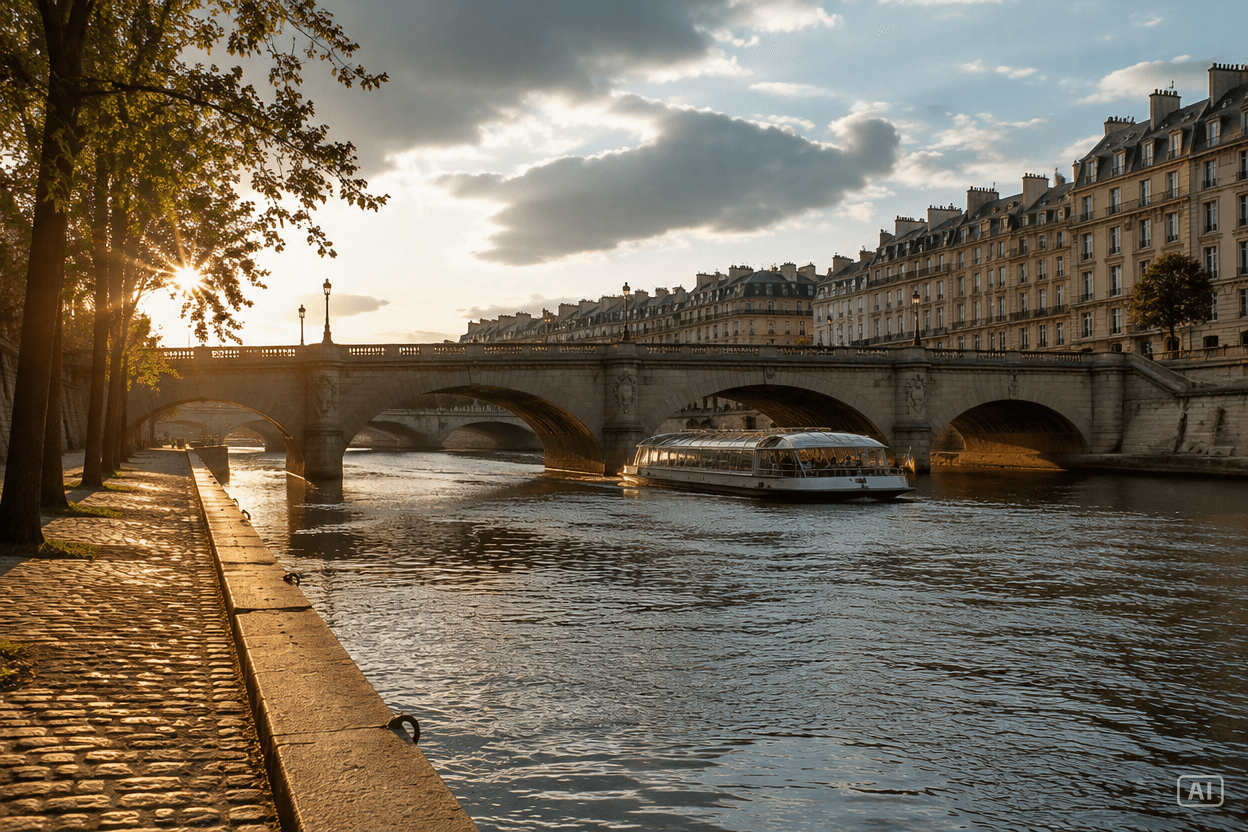
This is the most forgiving category in the city. Commentated departures follow one another all afternoon, the boats are large, and a place freed up late in the day does not show. In summer the last cruises leave around ten in the evening, which is a margin few activities offer. It is also the only way to see Paris along an axis you will not otherwise travel.
Walking tours
A neighbourhood walking tour runs two to three hours and depends on no ticketing quota: the guide decides how many people they take. Many open an extra departure when demand is there, and that is exactly what keeps these available late. Montmartre, the Marais, the Latin Quarter, the covered passages — these are routes that walk as well at four in the afternoon as at ten in the morning, and often better, because the city has emptied of its morning groups.
Cooking and pastry workshops
A workshop books less late than a tour, for a concrete reason: the ingredients are bought for a number of participants known in advance. The booking deadline is therefore longer — a few hours, sometimes the day before. In exchange, afternoon and early-evening workshops are plentiful in Paris and fill more slowly than the morning ones. Allow three hours, and an activity that takes the whole end of the day rather than a slot to wedge between two other things.
Neighbourhood food tours
A tasting tour generally leaves in the late afternoon or early evening, which makes it one of the rare activities whose departure time matches the moment you are looking for it. The format is stable: five or six stops, two to three hours, one neighbourhood, and enough to replace dinner rather than precede it. It is the best use of an unplanned evening in Paris, and by some distance the most under-booked.
What it costs
The orders of magnitude are stable and worth knowing before you compare. A guided tour or a cruise sits between twenty and forty euros. A museum with skip-the-line access runs thirty to sixty. A cooking workshop or a private tour goes well above that, and rightly so: you are no longer buying a place in a group but somebody's time. The prices shown are the operator's, with no booking fee added on top.
The habit that saves the afternoon
Look at the booking deadline before anything else. Every activity sets its own — often twenty-four hours, sometimes far less — and it is that, not how busy the place is, that decides what you can still take. A departure past its deadline disappears from the calendar rather than letting you reach payment and refusing you there: what shows as available genuinely is. Filtering on today and then reading the departure times will save you more time than any list of good addresses.