Berlin in winter: the season almost nobody books
Berlin is one of the few big European cities whose winter is not a degraded version of its summer. That is not a matter of stoicism. It is the nature of what there is to visit.
Very little closes
Berlin's activities are indoors, underground, or openly built around being cold. The result is a winter calendar that is very nearly complete, where Barcelona and Rome lose a real part of their offer between December and February. In the same movement, this is when the city is at its cheapest and its groups at their smallest: the same tour, with the same guide, in front of eight people instead of thirty.
The exception is the Spree cruises
This is about the only genuinely seasonal category. The boats cut back sharply in winter and the departures that remain are thin. If a cruise is part of what you want from Berlin, it is the one thing to check before choosing your dates rather than after.
Here, history is the activity
Berlin is the European capital where the subject of a tour is the recent past rather than ancient heritage. The Wall, the Third Reich sites, Cold War Berlin, the Stasi archives: that is the backbone of what gets booked, and none of it has a season. It is also what makes a guide more useful here than almost anywhere else.
The tours where the building is gone
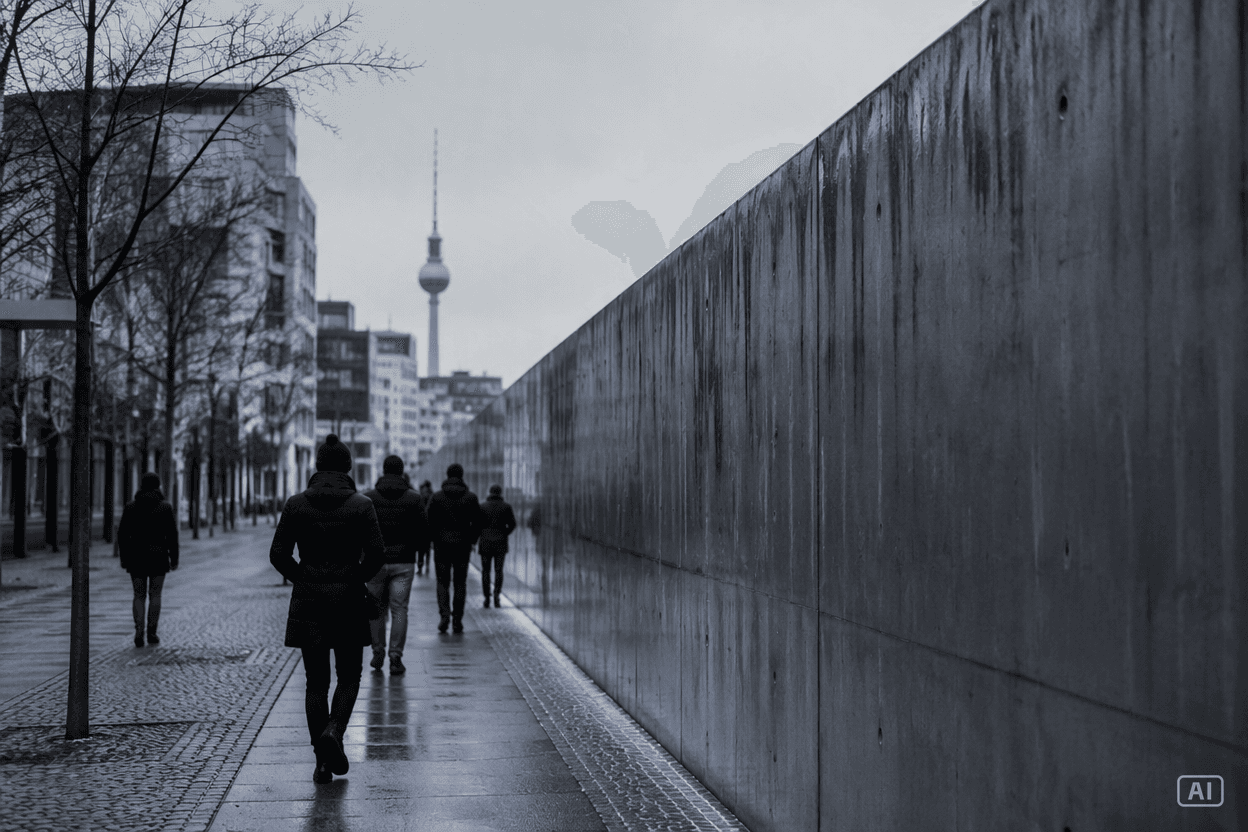
This is the city's peculiarity, and the best test for where to put your money. The Wall, the Topography of Terror, the government quarter, Cold War Berlin are largely made of absences and marks on the ground: without someone to explain them there is almost nothing to see — a line of cobbles, an empty lot, a plaque. A guide there is not a comfort, it is the visit. With museums it is exactly the other way round: the object is present, it speaks for itself, and plain admission does the job.
Two districts properly, or four badly
Berlin is bigger than it looks on a map and its interesting districts do not touch. An honest weekend is two of them. A three-hour walk through Mitte covers the Reichstag, the Brandenburg Gate and the Memorial; the second day usually goes to Kreuzberg, or to a day trip to Potsdam or Sachsenhausen. Trying to add Prenzlauer Berg and Charlottenburg to the same weekend produces four districts crossed and none visited.
What to plan for in winter
Two things, and they are enough. The first is to dress seriously: a two- or three-hour outdoor tour in Berlin in January often runs without a single shelter on the route, and it is the cold that cuts visits short, never the interest. The second is light. The days are short, dark falls early, and a midday slot beats a late-afternoon one for anything looked at outdoors. Evening tours lose nothing — they were built for the dark already.