Barcelona: the Gaudí sites are the constraint, the rest is not
Organising Barcelona amounts to organising three buildings. The rest of the city is markedly more forgiving than people think, and confusing the two is what costs you the flexibility that makes the trip pleasant.
Three sites set the calendar
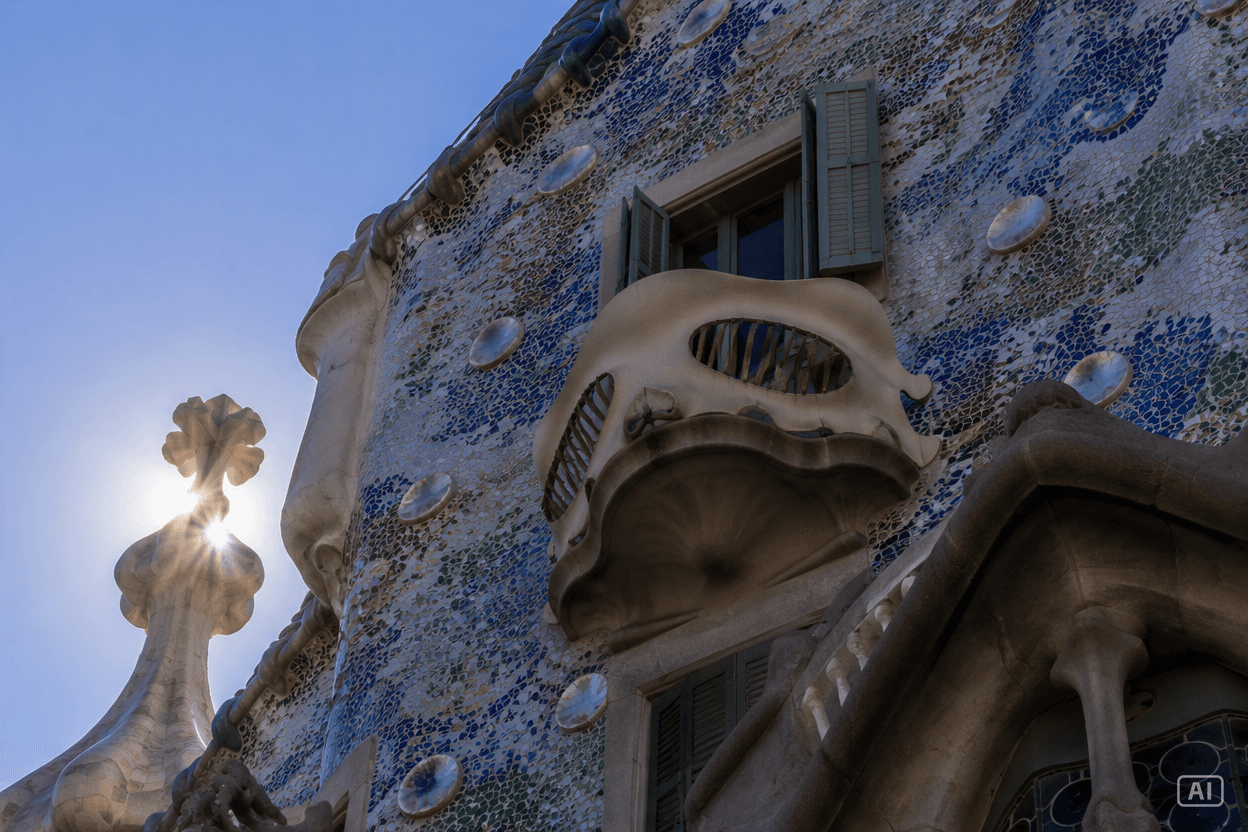
The Sagrada Família, Park Güell and Casa Batlló all run on timed entry, and all see their good slots go early. They, and nothing else, are what imposes fixed dates on a stay in Barcelona. Booking them first and building the days around them is the only method that avoids discovering on arrival that the one remaining slot falls on your departure day, at lunchtime.
What a good slot means here
At the Sagrada Família the question is not getting in but knowing when the light comes through the windows: one side in the morning, the other in the late afternoon, and the interior is not the same colour depending on the hour. At Park Güell the restricted-access area is better before the heat and the groups settle in. A midday slot in summer is not only busier, it is less beautiful. This is the rare case where the hour you buy matters as much as the ticket.
The rest of the city does not book the same way
Market tours, tapas walks, modernist architecture strolls, boat trips out of Port Vell: all of that stays widely available at short notice, often on the day. These are elastic-capacity activities with no ticketing quota behind them. There is therefore no point locking them in weeks ahead — and a real point in keeping them free, since they are what will absorb changes in weather and in pace.
The Eixample lies about distance
The old city walks; the Eixample makes you believe it walks. Its blocks are long and its diagonals longer: what looks like four streets on a plan routinely takes twenty-five minutes, in full sun and without shade. It is the main cause of a missed slot in Barcelona, and it has nothing to do with booking. When two activities are separated by the Eixample, count the journey as an activity in its own right.
The metro, above Plaça Catalunya
It is quick, cheap, and it is the honest answer for anything north of Plaça Catalunya. Walking up to Park Güell from the centre is possible, regularly attempted, and rarely a good idea — the last stretch climbs. Take the metro up and walk back down towards the city: the same route, in the right direction.
An order that works
Block the Gaudí slots first, at the hours when those buildings are beautiful rather than at the hours left over. Then place a single other thing per half day, allowing for the journeys. Keep the evenings open for tapas and markets, which decide very well on the day. What you get is a trip with fixed points that is not a schedule, which is about the best way to approach this city.