Rome in two days: the scheduling mistake almost everyone makes
Rome is walkable and exhausting in the same breath. It is that contradiction, not the list of sites, that should decide how you organise two days there.
Twenty minutes on foot, and cobblestones
The Forum, the Pantheon and Trastevere are twenty minutes' walk from one another. On a map that looks like a city you finish in a day. In the legs, the cobbles make themselves felt by late afternoon, and the twenty-minute walk that seemed free in the morning becomes the reason you drop the third thing you had planned. Distance is not the problem in Rome. The ground is.
The first morning is always overloaded
The mistake is so regular it is nearly a ritual. You arrive full of energy, stack the Colosseum, the Forum and the Palatine into the same morning because they are neighbours, and come out at two in the afternoon unable to look at another stone. Those three form one vast, shadeless site. Giving them a whole morning is not indulgence, it is the minimum format — and the day has to account for what they take, not only for the time they occupy.
Two things a day, not four
The division that works in Rome fits one rule: one major thing in the morning, one light thing in the afternoon, the evening free. Major means the ancient excavations, the Vatican Museums, the Borghese Gallery. Light means a neighbourhood walk, a food tour, a basilica, a market. Three majors across two days is already ambitious. Four is a sport, and it is paid for in memory: you remember having seen, not having looked.
What has to be booked ahead
Timed-entry sites, and only those, impose their calendar on the rest of the trip. The Colosseum and its archaeological ensemble, the Vatican Museums, the Borghese Gallery with its strict cap and genuinely limited slots. These are the fixed points everything else is arranged around, and booking them first is what stops you rebuilding the whole programme once you arrive.
What can wait for the day itself
Everything else, or nearly. Walking tours of the historic centre, food tours in Trastevere or Testaccio, evening strolls, basilicas: these keep places late and have no reason to occupy a decision made three weeks ahead. Keeping them open is in fact an advantage — it is what lets you fit the second day to the real tiredness of the first.
Evenings are the best moment, and the emptiest part of the plan
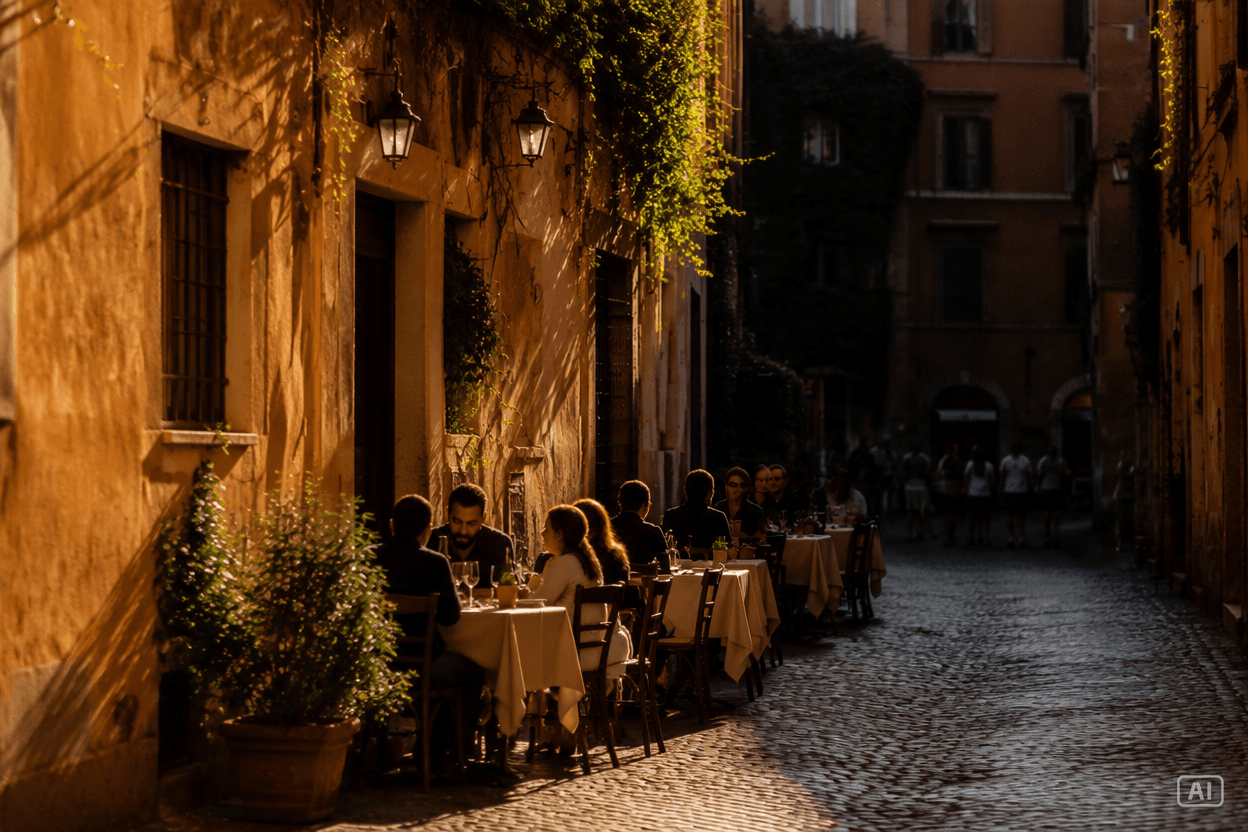
Rome is at its best as the sun drops: the groups have packed up, the façades turn ochre, the squares become places to sit again. It is also the slot most travellers do not plan at all, and end up spending on the hunt for a restaurant. An early-evening food tour, a night visit, a simple organised walk from one neighbourhood to another: these are the hours that separate having seen Rome from having been there.